Hydrocarbon-hungry Bacterium Could Mop Up Oil Spills
S. Himmelstein | April 10, 2018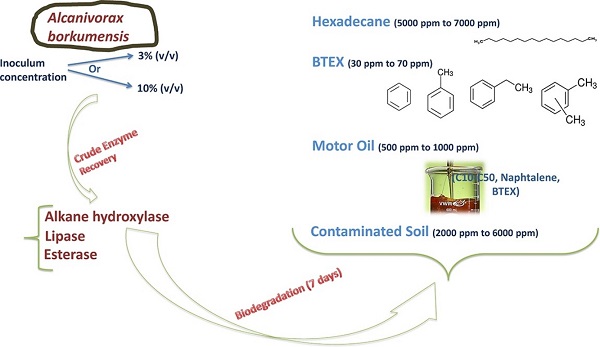 Source: INRS
A hydrocarbon-gobbling bacterium could form part of a microscopic cleaning crew charged with remediating oil spills. After examining numerous strains and sequencing the genomes of thousands of bacteria from different sources, researchers at Canada’s Institut national de la recherche scientifique (INRS) identified Alcanivorax borkumensis as a preferred micro-janitor.
The marine organism’s genome contains the codes of a number of useful enzymes and it is classified as “hydrocarbonoclastic” — it uses hydrocarbons as a source of energy. The ubiquitous bacterium multiplies rapidly in areas with high concentrations of oil compounds, which partly explains the natural degradation observed after some spills.
Since its remedial potential had not been assessed, the team characterized the enzymes produced and revealed the presence of hydroxylases that are resistant to chemical conditions and far more effective in promoting hydrocarbon degradation than those found in other species.
When applied to samples of contaminated soils, purified enzymes from A. borkumensis effectively degraded over 80 percent of some hydrocarbon compounds. The degradation efficiency for different concentrations of petroleum hydrocarbon substrates was significant, reaching 73.75 percent for 5,000 ppm of hexadecane, 82.80 percent for 1,000 ppm of motor oil, 64.70 percent for 70 ppm of benzene-toluene-xylene and 88.52 percent for 6,000 ppm of contaminated soil.
The researchers will next explore the potential of A. borkumensis for decontaminating sites, particularly those in difficult-to-access environments, which present a major challenge during oil spill cleanup efforts.