
No Matter How Technology Evolves, Springs Remain
March 07, 2018Sponsored content
Technology is changing at a rapid pace.
It seems as if every day there is a new smart home appliance or new advanced automotive application that is changing how people live or how businesses operate. But this is just the beginning as massive changes and upgrades are being seen in the industrial, government, aerospace and healthcare markets as a result of new technologies making automation and other processes easier.
However, all of these innovations, new devices and technology improvements have one thing in common: they all still require precision springs and wire forms.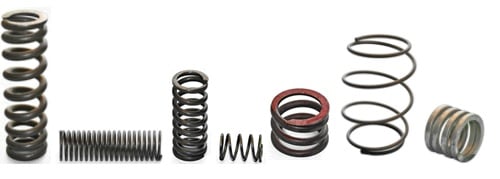 Figure 1: A collection of compression springs offered by Fennell Spring. Source: Fennell Spring Company
In the automotive market, changes are rapidly coming in terms of both interest being generated in electric cars and — what may be the biggest game changer in the automotive industry in decades — self-driving vehicles. Yet, despite these massive technology changes, springs remain. It is impossible to manufacture a vehicle without the use of precision springs because they are a critical component in the assembly of automotive parts and vehicles.
Precision springs, such as those from Fennell Spring Company, will continue to be used in a wide range of parts, including but not limited to: air bag systems, brakes, clutches, doors, engines, seating and suspensions. Regardless of the progress in self-driving systems or electric cars, these critical components and systems won’t be going away anytime soon.
Meanwhile, in the home, smart appliances are all the rage with appliances such as smart refrigerators, smart ovens, smart dishwashers and smart microwaves. These include refrigerators that order food and other goods for you, ovens and refrigerators that keep tabs on the food you are cooking and dishwashers you can control via Wi-Fi.
Despite all these new networking technologies being added to appliances that have been used for decades, springs remain. If it cooks, cools or cleans, precision springs are still a critical component of every appliance that is rolled out of a factory. Without precision springs, it would be extremely difficult to manufacture these appliances in a user-friendly way. Figure 2: Torsion and clutch springs from Fennell Spring. Source: Fennell Spring Company
In terms of the healthcare market, devices are getting smaller as well as smarter. At the same time these devices are getting more complex. But again, despite the advances and increasing complexities, springs remain in order to meet the needs of medical manufacturers, such as the springs offered by Fennell Spring.
Springs are used in healthcare for surgical equipment and applications that require steady movements, in dental X-ray units that require less than 360 degrees of rotation and in medical equipment that requires long deflection such as operating room or mobile monitors.
These are just a handful of the changes that have happened in numerous markets. Yet, whenever a new technology has been introduced or included in a new design, springs remain, and will continue to regardless of what new technology is around the corner or where a new consumer demand crops up.


How true. As long as humans live in a physical world, Basic physical phenomena will always be required. And toward the goal of not being "stuck up a creek without a paddle", Basic skills in "niggar-rigging" will never go out-of-style. Isn't science great?