Wave springs for compact, high precision applications
April 21, 2026Springs of various types have been used throughout history to store energy, provide shock and vibration isolation, and to exert force in numerous mechanical devices and systems. The wave spring is a special type of compression spring that was invented in the late-1960s by the Smalley Steel Ring Company. Properties of wave springs differ from conventional coil springs in unique ways, and they are used in countless practical applications.
Typical coil springs are made from round wire that is wound into a helical shape (Figure 1). Wave springs, on the other hand, are made from flat wire that is formed into a series of waves.
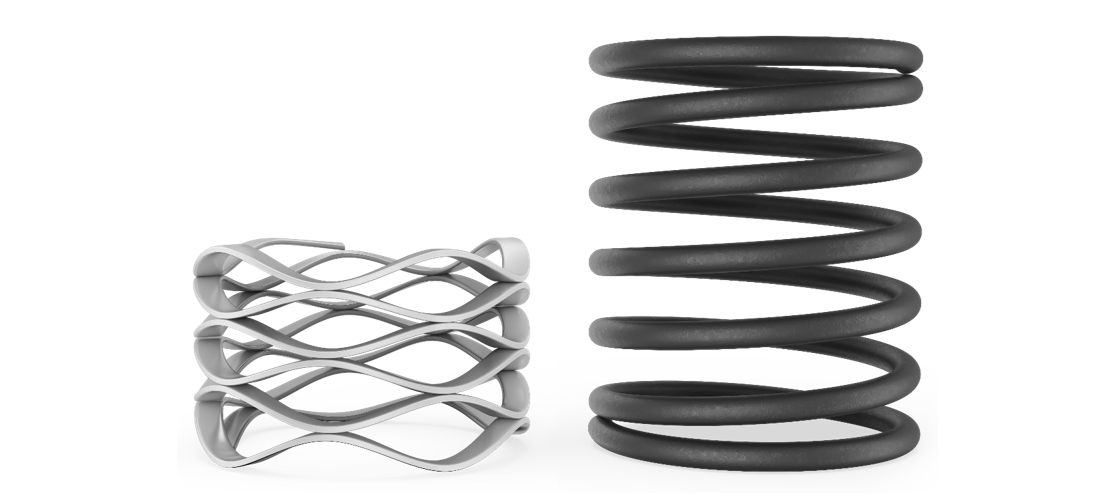 Figure 1: Wave spring (left) versus coil spring (right). Source: Smalley
Design benefits
Besides differences in appearance, wave springs deform differently than coil springs when they are subjected to axial compression loads. On one hand, coil springs derive their stiffness through twisting or torsional deformations about the wire circular cross section. Wave springs, on the other hand, derive their stiffness through flexing or bending deformations about the flat wire cross section.
Due to their flat-wire construction, wave springs with similar spring rates as coil springs have a smaller cross-section than their round-wire counterparts. This allows the wave spring to reduce the height of a spring-loaded mechanical assembly by up to 50%, while providing the same stiffness and force capability as a traditional coil spring. Wave springs are therefore ideal for tight, weight-sensitive or high-precision applications. They also provide a consistent spring rate, enabling a highly accurate force-displacement characteristic, which may be crucial for precision applications.
The design and structure of wave springs also evenly distribute bending stresses, increasing fatigue resistance thereby increasing their durability and operational life. These advantages may make wave springs an ideal replacement for traditional coil springs.
Wave spring uses in the field
Wave springs are widely used in several applications and industries, such as automotive, aerospace, medical devices and electronics, to name a few. For example, bearing assemblies require precise control of the axial preload to ensure constant contact between the rolling elements and bearing races (Figure 2). Too much preload can lead to excessive wear, whereas too little preload can lead to excessive play. The correct bearing preload can reduce shaft misalignment, eliminate high bearing stress, prevent excessive vibration and minimize differential thermal expansion. Within a compact form factor, wave springs can provide precise control of these axial preloads, thereby reducing bearing wear and increasing life.
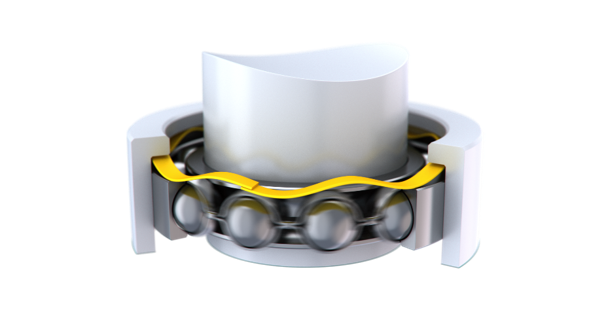 Figure 2: Wave spring in compact bearing assembly. Source: Smalley
The Smalley advantage
Smalley is the engineer’s choice with over 100 years of manufacturing excellence of numerous products such as wave springs, retaining rings and constant section rings for several applications in several industries. Although the company maintains a stock of over 11,000 standard products ready for immediate shipment, their dedicated staff of industry-specialized engineers can quickly and economically design and develop prototypes for custom mechanical assemblies. Learn more about their wave springs and other solutions today.