New Low-Cost Methane to Methanol Technique Promises Reduced CO2 Emissions
Abe Michelen | October 17, 2017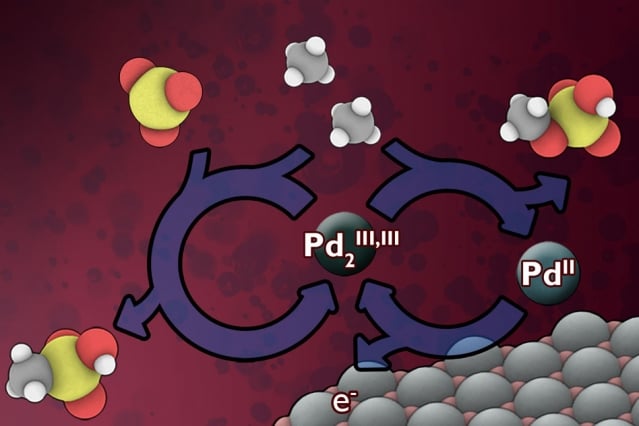 MIT chemistry professor Yogesh Surendranath and three colleagues have found a way to use electricity, which could potentially come from renewable sources, to convert methane into derivatives of methanol. The researchers developed a low-temperature electrochemical process that would continuously replenish a catalyst material that can rapidly carry out the conversion. Source: MIT
On October 17, the Massachusetts Institute of Technology (MIT) announced the development of a method to convert methane into derivatives of methanol using direct electricity that could very well come from renewable energy sources. This new method, developed by MIT chemistry professor Yogesh Surendranath, who is the Paul M. Cook career development assistant professor in MIT’s Department of Chemistry, and three colleagues, could open the door for low-cost conversion at remotes sites and at large facilities as well.
Methane (CH4) is the main constituent of natural gas and it is a more potent greenhouse gas than carbon dioxide. The oil extraction industry wastes over 150 billion cubic meters of methane every year by burning it off — a process called flaring — to prevent its release into the atmosphere. This process still generates over 400 million tons of carbon dioxide, which, according to a 2011 World Bank Report, is responsible for 1.2 percent of global carbon dioxide emissions.
“Flaring is an unproductive waste of a valuable, non-renewable resource and a significant source of carbon dioxide and methane emissions,” says Bjørn Håmsø, who manages the Global Gas Flaring Reduction Partnership at the World Bank in Washington, D.C.
To significantly cut carbon emissions by ending flaring, industrial, government and educational institutions have been trying to develop a method to convert methane into methanol, a liquid that can be used as vehicle fuel or as a precursor to many chemical products. Over 30 million tons are already consumed per year.
Methods of direct oxidation — using only water, for instance — have been suggested, but this process requires expensive equipment and strong oxidants, sometimes producing carbon monoxide. Finding a practical method to convert methane at low cost for remote sites has been a grand challenge in chemistry for decades.
“This finding opens the doors for a new paradigm of methane conversion chemistry,” says Jillian Dempsey, an assistant professor of chemistry at the University of North Carolina, who was not involved in this work.
Contrary to existing methods of conversion that require high temperatures and costly equipment, the MIT researchers have found a simple, low-temperature process that can work continuously by using a catalyst material to carry out the conversion.
“This technology could potentially lead to a relatively low-cost, on-site addition to existing wellhead operations,” says Surendranath. "Catalysts that could do the job have been studied for many years, but they typically require harsh chemical agents that limit the speed of the reaction. The key new advance was adding an electrical driving force that could be tuned precisely to generate more potent catalysts with very high reaction rates. Since we’re using electricity to drive the process, this opens up new opportunities for making the process more rapid, selective, and portable than existing methods."
The research team included postdoctoral researcher Matthew O’Reilly and doctoral students Rebecca Soyoung Kim and Seokjoon Oh, all in MIT's Department of Chemistry. The work was supported by the Italian energy company Eni S.p.A. through the MIT Energy Initiative.
The results of the research were published in the journal ACS Central. An abstract is found here: http://pubs.acs.org/doi/full/10.1021/acscentsci.7b00342