Common clay can curb methane emissions
S. Himmelstein | April 19, 2022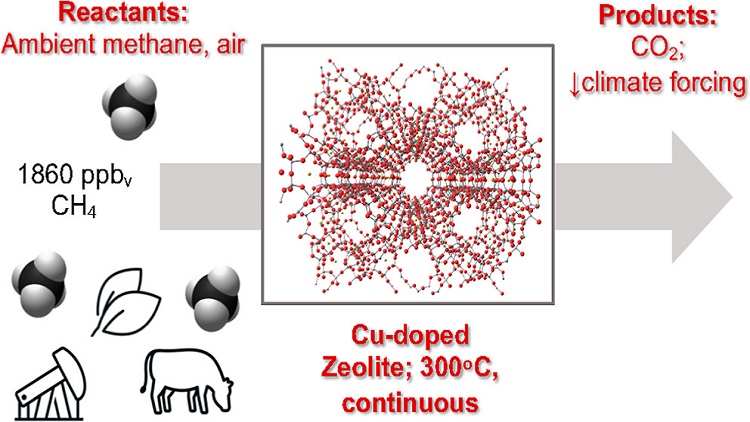 Copper-treated zeolite particles convert atmospheric methane into carbon dioxide. Source: ACS Environ. Au 2021
The methane emitted from oil and gas drilling, agriculture, coal and ore mining, wetlands and other sources is a more potent greenhouse gas than carbon dioxide. MIT researchers have dug up a dirt-cheap solution based on the use of zeolite, an abundant, inexpensive clay, to remove atmospheric methane.
Treated with a small amount of copper, the material proved effective at absorbing methane from the air, even at extremely low concentrations, in laboratory tests. Copper-enhanced zeolite particles packed into a reaction tube were heated externally as a gas stream with methane levels ranging from 2 ppm up to 2% concentration flowed through the tube. Peak effectiveness of the process was observed at about 300° C. The methane is converted into less impactful carbon dioxide, speeding up a chemical process that would occur naturally and reducing the near-term climate impact.
By catalytically oxidizing the methane, the heat-generating process represents a flame-free form of combustion. If the methane concentration is above 0.5%, the heat released is greater than that used to initiate the conversion and could be harnessed to generate electricity.
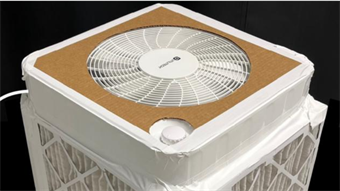
Efforts are underway to engineer devices that would be compatible with existing air-handling systems and could simply be an extra component added in place.
A paper on this research is published in ACS Environment Au.