
Biomaterial Can Replace Plastic Packaging
S. Himmelstein | September 22, 2017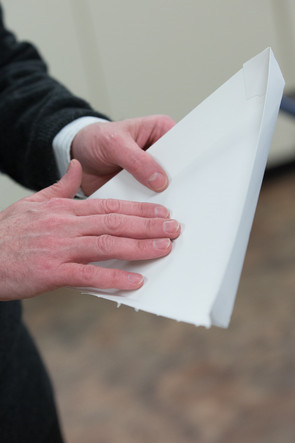 Paperboard coated with the biomaterial exhibited strong oil and water barrier properties. Source: Pennsylvania State University
Plastic packaging is known to take a toll on the environment, from clogging landfills to polluting marine ecosystems. More than 29 million tons of plastic became municipal solid waste annually in the U.S. alone and almost half is plastic packaging. An ecologically benign replacement for petroleum-based plastics developed at Pennsylvania State University may provide a sustainable solution for this pervasive problem.
A new compostable biomaterial can be used as a barrier coating in such diverse applications as food packaging, water-resistant paper and wallboard and ceiling tile coating. The material is composed of treated cellulose pulp from wood or cotton along with chitosan. These inexpensive polysaccharides form a durable bond that provides the foundation for impervious films, coatings and adhesives. The chitosan is derived from the chitin found in crustacean shells.
"The material's unexpected strong, insoluble adhesive properties are useful for packaging as well as other applications, such as better performing, fully natural wood-fiber composites for construction and even flooring," says Jeffrey Catchmark, professor of agricultural and biological engineering, College of Agricultural Sciences. "And the technology has the potential to be incorporated into foods to reduce fat uptake during frying and maintain crispness. Since the coating is essentially fiber-based, it is a means of adding fiber to diets."
The researchers demonstrated the polysaccharide polyelectrolyte complex-based materials to be potential competitive barrier alternatives to synthetic polymers for many commercial applications. Paperboard coated with the biomaterial, comprised of nanostructured fibrous particles of carboxymethyl cellulose and chitosan, exhibited strong oil and water barrier properties. The coating also resisted toluene, heptane and salt solutions and exhibited improved wet and dry mechanical and water vapor barrier properties.



OK, Little Johnny, eat your chitosan so you will grow up big, tall, and regular!