
Orion Spacecraft Powers Up for the First Time
Peter Brown | August 22, 2017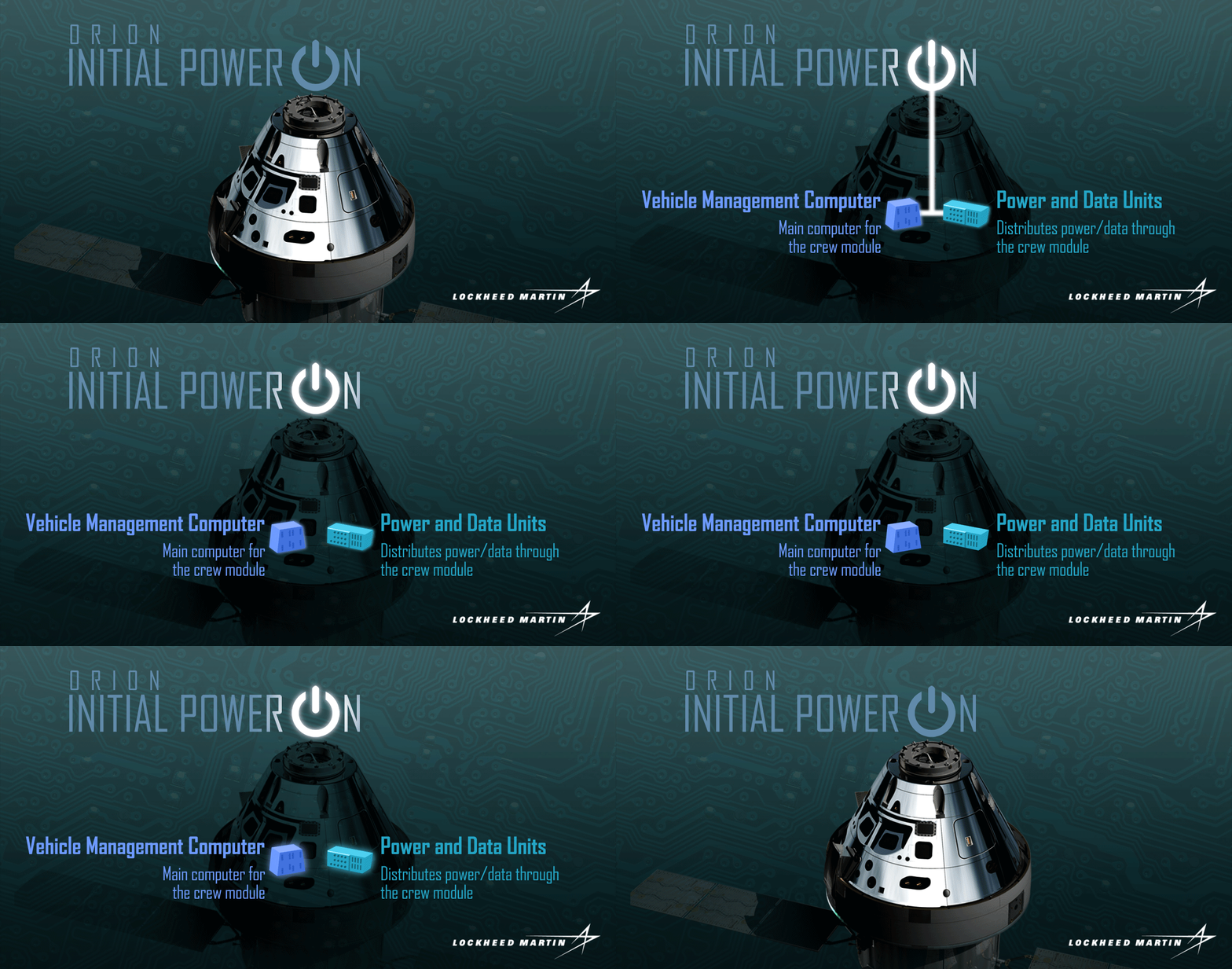 Engineers at Lockheed Martin and NASA have powered up the Orion spacecraft for the first time at Kennedy Space Center, Florida.
The Orion spacecraft is the next-generation module designed for human spaceflight and will fly more than 40,000 miles beyond the moon during a nearly three-week Exploration Mission-1 (EM-1) — something that hasn’t been possible before.
The power-on event was the first time the vehicle management computers as well as the power and data units were installed on the crew module, loaded with software and tested. These systems, considered to be the brain and heart of the capsule, is the first step in testing all of the crew subsystems, Lockheed Martin says.
"Orion was designed from the beginning to take humanity farther into space than we've ever gone, and to do this, its systems have to be very robust and reliable," says Mike Hawes, VP and Orion program manager at Lockheed Martin. "Over the last year, we've built great momentum in assembling the crew module for EM-1. Everyone on the team understands how crucial this test campaign is, and more importantly, what this spacecraft and mission means to our country and future human space flight."
While there won’t be any astronauts on the first flight of the Orion spacecraft, a large majority of the subsystems and avionics are the same design that astronauts will rely on during following missions with the spacecraft. The EM-1 will also utilize NASA’s Space Launch System, dubbed as the most powerful rocket in the world. Testing how the rocket works with the Orion module is critical, as is determining how its interdependent systems operate in the harsh conditions of space, Lockheed Martin says.
The next steps are to continue to integrate the 55 components of the spacecraft’s avionics suite and connect them with nearly 400 harnesses. Over the next two to three months, each system will be installed and tested to ensure Orion is ready to move to the environmental testing phase.



This represents the next milestone in manned spaceflight, and will tell humans about the effect on humans while using this vehicle outside the protection of the magnetosphere, etc.