
A New Way to Harness Wind Power Every Day
Siobhan Treacy | June 09, 2017Scientists from the University of Rhode Island, Florida Atlantic University, USA and Wuhan University China have discovered a new way to collect and use wind power, even if there isn’t any wind.
This team formed with the goal of solving a major renewable energy problem. "The power grid is a real-time system requiring the plants produce the right amount of electricity at the right time to consistently and reliably meet the load demand," wrote Haibo He, the Robert Haas Endowed Chair Professor in the department of electrical, computer, and biomedical engineering at the University of Rhode Island.
To fix this problem, researchers proposed a day-ahead economic dispatch model for wind-power systems. The algorithm that they came up with is centered on consideration for the day of and next day's planned energy needs. The goal was to come up with a way that wind power can be used consistently day to day.
Researchers found that the data of wind behavior pattern is random but there is logic behind each wind movement. They placed constraints on the data 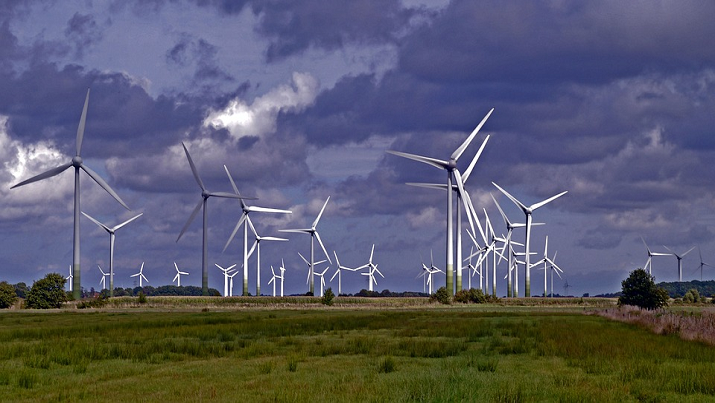 A wind turbine farm (pixabay.com)movements, removed the outliers and promised the bulk of the data is performing as expected. Researchers then verified the performance expectations and tested the data in real-world simulations.
This successfully predicted the best model for real-time wind energy use, as well as day-ahead energy preserving. Although it seems successful, scientists say that the new method might be subjective because it relies on the past to predict the future.
The team is developing these optimization and control methods to integrate renewable energy into a smart grid. He focuses on modeling and simulation of the smart grid, and his team will collaborate with the power industry to test their models and algorithms.
The paper on this research was published in IEEE/CAA Journal of Automatica Sinica (JAS) in a joint publication with the Institute of Electrical and Electronic Engineers (IEEE) and the Chinese Association of Automation.


The wind is always blowing (somewhere), and not only that, it is five o'clock somewhere!
I think these folks are definitely onto something here, but it really depends on the size of the grid over area, the capacity of the wind generators and numbers, etc., etc.
I think we will see tremendous advances in energy storage over the next 5 to 10 years that will at least partially change the inputs to the game. Think molten silicon storage with TPV generation off the heat, as this can be a net efficient cycle, is not site specific, and has a higher energy density than any known electrochemical system.