Water Suppresses Rocket-liftoff Sound
Nancy Ordman | June 08, 2017When one of NASA’s massive rockets lifts off the launch pad, the engines’ thrust generates a massive amount of heat. But this heat is not the biggest threat to the engines’ integrity; the sound energy generated by the 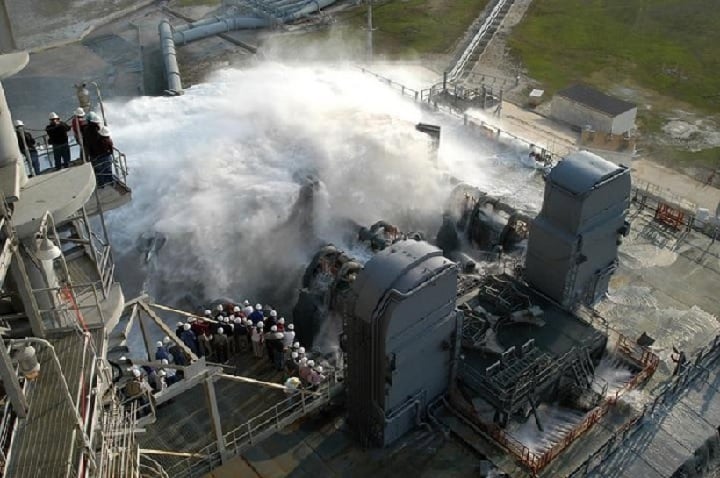 NASA’s sound suppression system in effect. Credit: NASAlaunch could destroy the rocket’s engines.
NASA’s clever solution to sound-dampening is just that: using water—900,000 gallons a minute—to absorb the sound energy. The idea of using water for sound absorption came from sonar, specifically, the use of bubbles. Bubbles absorb sound waves by converting sound energy to heat. When a sound wave hits a bubble, the bubble compresses, and the compression causes the conversion.
Similarly, water molecules encountering a sound wave convert the sound energy to heat. By spraying spectacular amounts of water around the launch pad, NASA effectively captures the engines’ roar. An enormous tank farm adjacent to the launch pad supplies water via 7-foot-diameter pipes; deep trenches carry the water away.
Spectators on site or watching television assume that the clouds they see during a launch come from the rocket engines—exhaust from fuel combustion. But these clouds are actually visible evidence of the NASA’s sound absorption solution: millions of gallons of water heating up with sound energy.