
Some Regions are Getting Hotter, Some Colder
Marie Donlon | May 26, 2017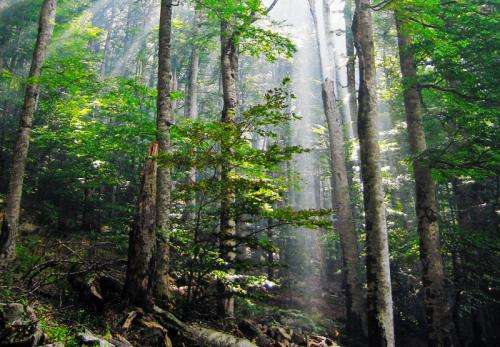 Image credit: WikipediaSome parts of the planet are becoming cooler and other parts are becoming warmer thanks to an increase in localized greening, according to evidence unearthed by a research team with the Directorate for Sustainable Resources in Italy and Ghent University in Belgium.
Published in the journal Science, researchers believe the increased greening is a byproduct of increased atmospheric carbon dioxide.
Because the increase in atmospheric carbon dioxide is creating greener parts of the planet (parts that were already green), researchers suggest that the greening is the cause for the slightly warmer and cooler regions.
However, researchers have found that atmospheric carbon isn’t the only thing contributing to this greening effect. In addition to human activities, these changes are also resulting from nitrogen used in fertilizers seeping into natural ecosystems.
According to researchers, in warmer regions, increased leaf cover can result in localized cooling due to plant transpiration (water evaporating), condensing in the air. The opposite effect occurs in cooler regions. In cooler, tree-covered environments, temperatures can slightly rise because less sunlight is being reflected from the surface.
Studying satellite data from the years 1982 to 2011, researchers were able to assign a leaf area index (LAI) to parts of the Earth’s surface. Based on the data, the team determined that for roughly 60 percent of all “leafy” areas, increased greening had mitigated global warming by roughly 14 percent. The increase in greening in colder regions lent to a 10 percent rise in air temperatures. The researchers also noted that the impact might be more dramatic in regions experiencing extreme weather conditions.
Researchers believe that changes to vegetation have an effect on local climate, and, consequently, should be taken into consideration as strategies are being developed to deal with a warming planet.


So what do we call this - climate scam change?
Has the earth shifted on its axle?? Causing some climate change?