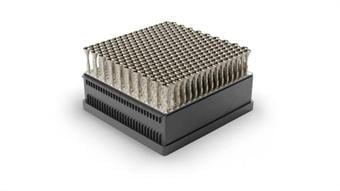
UAV Soars on Fuel Cell Power
S. Himmelstein | April 26, 2017Protonex, a subsidiary of Ballard Power Systems, successfully powered test flights of the ScanEagle unmanned aerial vehicle (UAV) with the company’s proton exchange membrane fuel cell propulsion system. The ScanEagle is manufactured by Insitu, a wholly owned subsidiary of The Boeing Company.
The test flights demonstrated that the fuel cell propulsion system offers power during flight that can be used to support greater payload diversity. The trials also documented acoustic footprint reduction that will enable mission routes that take the ScanEagle closer to its targets.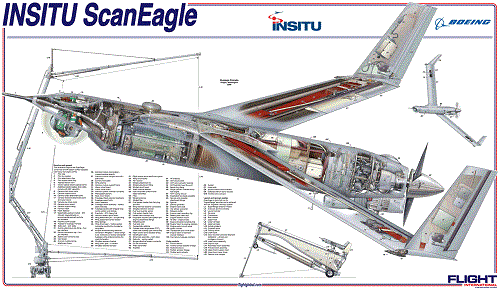
Advantages of the Protonex fuel cell propulsion modules over traditional internal combustion engine propulsion systems include: significant improvement in the expected MTBF (mean time between failures) of up to 5x; silent operation; 100 percent throttle flexibility, including mid-air start-stop capability; and use of existing JP8 fuel in ground refueling systems.
The ScanEagle platform features multiple payload capabilities, including high-definition imaging at a fraction of the cost of larger UAV systems and has logged over 800,000 flight hours in military and civilian applications. The UAV is operated in conjunction with Insitu’s Mark4 Launcher—a low-maintenance, runway-independent platform—along with its SkyHook® recovery system.
ScanEagle is 1.55 m (5.1 ft) in length, has a wingspan of 3.11 m (10.2 fet) and maximum takeoff weight of 22 kg (48.5 lbs). It can fly at a maximum speed of 41.2 meters per second (80 knots), reach a ceiling of 5,944 m (19,500 ft) and has an endurance capability of more than 24-hours.