Wearables May Help Predict and Prevent Asthma Attacks
Engineering360 News Desk | June 06, 2016A wearable system consisting of a wristband and chest patch is under development to monitor a user’s heart and respiratory rate and environmental parameters to aid in prediction and prevention of the onset of asthma attacks.
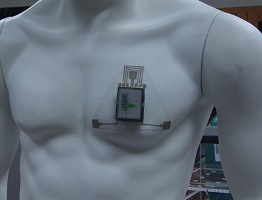 Prototype of the HET chest patch. Image source: James DieffenderferChest patch sensors in the Health and Environmental Tracker (HET) system monitor physiological variables, including skin impedance and wheezing in the lungs. Humidity, temperature, and ozone and volatile organic compound exposures are recorded by wristband sensors. Heart rate and blood oxygen levels are analyzed by sensors in both components. The only non-wearable element is a spirometer into which patients breathe daily to measure lung function.
The data are wirelessly transmitted to a central computer for evaluation by custom software. North Carolina State University engineers plan to have the system provide guidance to patients via smartphones. Predicting the onset of asthma attacks could enable patients to prevent these events by changing their activities or environments.
The use of nano-enabled sensor technologies in HET design has resulted in power consumption levels in the sub-milliwatt range, which is expected to extend device battery service life. Future research will focus on controlled environment trials, determination of variables most effective in predicting asthma attacks, and developing prediction software.