Soap Molecule Promises to Clean Up Cleaners
Chuck Heschmeyer | November 09, 2016A team of researchers led by the University of Minnesota has invented a new soap molecule made from renewable sources that could reduce the number of harsh chemicals used in shampoos, detergents and other cleaning products and lessen their environmental impact.
The new molecules also are said to perform better than some conventional soaps in challenging conditions such as cold and hard water.
The University has received a patent on the technology and licensed it to a local start-up company, Sironix Renewables.
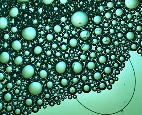 OFS molecules could clean up household soaps and detergents. Source: Paul J. Dauenhauer/University of Minnesota The soap molecule, called Oleo-Furan-Surfactant, or OFS, was developed using a chemical process that combines fatty acids from soybeans or coconut with sugar-derived rings from corn. The OFS molecules were found to perform better in cold water where conventional soaps become cloudy and unusable.
In addition, OFS was shown to form soap particles, called micelles, necessary for cleaning applications at low concentrations, which would reduce the environmental impact when discharged into the water supply.
Researchers used nanoparticle catalysts to optimize the soap structure for foaming ability and other cleaning capabilities. OFS was shown to foam with the consistency of conventional detergents, so it could directly replace detergents for existing equipment such as washing machines, dishwashers, and consumer products, researchers say.
In addition to it cleaning performance and biodegradability, OFS was engineered to work better than conventional soaps in hard water when minerals in the water bind with traditional soaps, like shampoos, and turn them into a goo-like substance. To combat this problem, conventionally formulated soaps and detergents add an array of extra chemicals, called chelants, that grab the minerals and prevent them from interfering with the soap molecules.
The OFS soap eliminates the hard water problem by using a naturally derived source that does not bind strongly to minerals in water. Researchers found that OFS molecules would foam, or form micelles, even at 100 times typical hard water conditions.
Collaborators on the project included the University of Delaware, University of Massachusetts Amherst, Sironix Renewables, the U.S. Department of Energy’s Catalysis Center for Energy Innovation, and Argonne National Laboratory.