A Greener Way to Generate Heat from Biomass?
John Simpson | October 31, 2016Scientists in the Netherlands report progress toward developing a “greener” method of generating heat from biomass. Rather than burning the material, which releases pollutants, they let fungi break it down to release heat.
One benefit of biomass, which consists of plant material and animal waste, is that there is no shortage. It is produced continuously as a waste product from paper and agricultural industries. But burning it emits fine particles and volatile organic compounds linked to health and environmental problems.
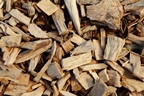 Burning biomass emits fine particles and volatile organic compounds. Image credit: Pixabay.One alternative approach involves adding microorganisms that can degrade the materials. So far, most investigations have involved room-temperature conditions. But for sustained use, these reactions would need to take place at temperatures above ambient conditions.
Leire Caizán Juanarena, Ph.D researcher in Wageningen University's Department of Environmental Technology, and colleagues wanted to see how much heat they could coax out of the process using two fungi species that do well in hot climates. They incubated two species—lignin-degrading Phanerochaete chrysosporium and cellulose-degrading Chaetomium thermophilum—with blocks of birch wood, either sterile or with its natural biota.
C. thermophilum produced the most heat, 0.63 watts per kilogram (w/kg), when degrading wood with its usual microbial inhabitants. To generate enough heat for an average home in the Netherlands, the researchers say they must determine optimal nutrient, moisture, and temperature conditions to increase power production to at least 6 w/kg.