Laser Airspeed Sensor Successfully Trialed
John Simpson | August 05, 2016BAE Systems scientists have successfully trialed a laser airspeed sensor designed to improve performance and fuel efficiency in high-altitude aircraft.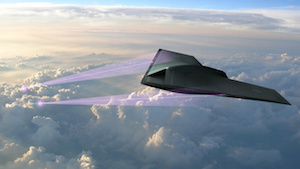 LASSI has the potential to detect air speed at a distance, meaning an aircraft could predict oncoming turbulence and change course accordingly. Image credit: BAE Systems.
Air speed is conventionally determined using pitot tubes, which protrude from aircraft and sense variations in air pressure with speed. Although typically heated, these tubes are vulnerable to blockage in icy conditions and can be damaged by collisions with birds and when the aircraft is on the ground.
Operating on the same principle as roadside speed guns, the Laser Air Speed Sensing Instrument (LASSI) works by bouncing ultraviolet laser light off air molecules and measuring the change in "color" of the reflections caused by the Doppler Effect. The further away from the ultraviolet light the reflection is, the faster the aircraft is traveling. Although this phenomenon is invisible to the human eye, the detector can identify minute changes in color, which indicate the aircraft’s airspeed.
“Conventional air data sensors [that] protrude from the sides of aircraft must be carefully located to work properly and are inaccurate at low airspeeds," says Dr. Leslie Laycock, executive scientist at BAE Systems. "LASSI can be located completely inside the aircraft and is accurate at low airspeeds. It can even measure negative air velocities. These features should ensure that the equipment is robust against damage, require[s] less maintenance and [is] easier to operate at lower airspeeds."
According to Laycock, a significant benefit is that LASSI has the potential to detect air speed at a distance, meaning an aircraft could predict oncoming turbulence and change course accordingly.
BAE Systems has tested LASSI in a low-speed wind tunnel and on ground vehicles. Engineers from the company predict the component technology could be miniaturized and be in use in aircraft within five years.