Grass as a Cheap Renewable Energy Source?
John Simpson | August 02, 2016A team of UK scientists has shown that hydrogen can be unlocked from fescue grass with the help of sunlight and a low-cost catalyst.
The finding could lead to a sustainable way of producing hydrogen, which has potential as a renewable energy resource due to its high energy content and the fact that it does not release toxic or greenhouse gases when burned.
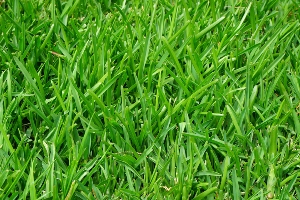 Researchers successfully produced hydrogen gas from a catalyst, light and fescue grass. Image credit: Pixabay. Hydrogen is contained all over the world in water, hydrocarbons and other organic matter. The challenge for researchers has been devising ways of unlocking hydrogen from these sources in a low-cost, efficient and sustainable way.
A promising source of hydrogen is the organic compound cellulose, which is a component of plants and one of the most abundant biopolymers on Earth. In their study, the team investigated the possibility of converting cellulose into hydrogen using sunlight and a simple catalyst—a substance that speeds up a chemical reaction without getting used up. This process, known as photoreforming or photocatalysis, involves the sunlight activating the catalyst, which then works to convert cellulose and water into hydrogen.
The researchers studied the effectiveness of three metal-based catalysts: palladium, gold and nickel. Nickel was of particular interest as it is a much more earth-abundant metal than the precious metals and, thus, is more economical.
In the first round of experiments, the researchers combined the three catalysts with cellulose in a round-bottom flask and subjected the mixture to light from a desk lamp. At 30-minute intervals, the researchers collected gas samples from the mixture and analyzed it to see how much hydrogen was being produced. To test the practical applications of this reaction, the researchers repeated the experiment with fescue grass, which was obtained from a domestic garden.
Results showed that “significant” amounts of hydrogen can be produced using this method with the help of sunlight and a low-cost catalyst, the researchers say. This may prove significant as it avoids the need to separate and purify cellulose from a sample.