Visual Cloud Computing Could Aid Disaster Response
John Simpson | July 14, 2016Computer science researchers from the University of Missouri (MU) have developed a cloud computing architecture that streamlines the processing of visual electronic data for use by responders and law enforcement in natural or man-made disasters.
Visual data created by numerous security cameras, personal mobile devices and aerial video can provide information critical for determining where to send emergency personnel and resources. But in disaster scenarios, the sheer volume of such data can create a bottleneck in the network.
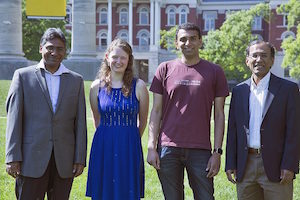 (L-r): Prasad Calyam, Brittany Morago, Rengarajan Pelapur and Kannappan Palaniappan were part of a team that developed cloud architecture for processing visual data in disaster situations. Image credit: MU.
The MU research team developed a framework for disaster incident data computation that links the system to mobile devices in a mobile cloud. Algorithms designed by the team help determine which data need to be processed by the cloud and which information can be processed on local devices, such as laptops and smartphones. This spreads the processing over multiple devices and helps responders receive the information faster.
“Often, we see many of the same images from overlapping cameras. Responders generally do not need to see two separate pictures, but rather the distinctive parts," says Kannappan Palaniappan, associate professor of computer science. "That mosaic stitching that we helped define happens in the periphery of the network to limit the amount of data that needs to be sent to the cloud."
In this way, visual data is compressed without losing information, Palaniappan says. Algorithms help determine which types of visual processing to perform in the edge or fog of the network—and which data and computation should be done in the core cloud.