
Injectable Radio Transmits Through Tissue
Engineering360 News Desk | June 21, 2016As the size of medical devices and implants diminishes to become less invasive, designers strive for greater functionality and performance in a compact space. This trend in medical engineering is borne out in the development of an injectable radio small enough to fit inside a medical grade syringe.
The radio designed at the University of Michigan’s Electrical and Computer Engineering Department is intended to transmit through tissue, providing real-time information to heart fibrillation as well as glucose monitoring devices. It is incorporated into the Michigan Micro Mote (M3), an ultra-low power computing platform (see video).
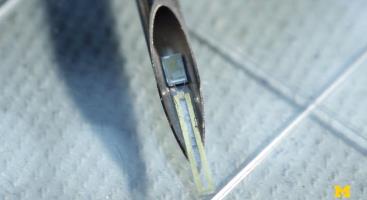 The tiny radio communicates through tissue. (Image credit: University of Michigan)A novel antenna design enables the bidirectional radio to transmit 50 cm (almost 20 in.) outside the body, sufficient to reach an external receiver, such as a smartphone. A capacitor draws power from the device’s battery before passing it along to the antenna and supporting data transmission in periodic bursts. The system transmits information more than five times the distance from any available radio of comparable size.



Students who seek Professional Economics Assignment Help from a writing company are guaranteed of getting good grades for their Academic Economics Research Papers and Online Economics Assignment Help Services that are free from grammatical errors.