Fuel-Pump Tests Pave Way for Methane-Fueled Mars Lander
Engineering360 News Desk | May 26, 2016The U.S. space agency NASA has tested a 3D-printed rocket-engine turbopump with liquid methane as a propellant for engines that may power spacecraft for trips to Mars.
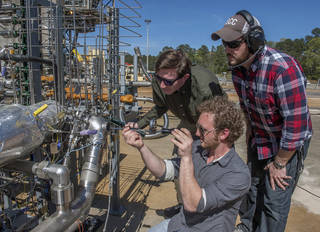 Engineers prepare a 3D-printed turbopump for a test at NASA’s Marshall Space Flight Center. Additive manufacturing, or 3D printing, allowed the NASA team to design, build and test two turbopumps with identical designs that worked well with liquid methane and liquid hydrogen.
Testing the turbopump at full power, it delivered 600 gallons of liquid methane per minute, enough to power an engine capable of generating 22,500 pounds of thrust.
Liquid methane is cooled to 255 degrees below zero Fahrenheit, whereas liquid hydrogen is cooled to 400 degrees below zero Fahrenheit. The higher temperature of liquid methane means it boils off more slowly and thus is easier to store for longer periods, a benefit for Mars missions. Also, technologies exist to make it possible to manufacture methane rocket fuel from carbon dioxide, which is plentiful in the Mars atmosphere.
“By demonstrating that the same turbopump can work with different fuels, we’ve shown that a common design would work for engines fueled by methane or hydrogen,” says Marty Calvert, the NASA engineer who designed the turbopump. “Because liquid methane is denser than hydrogen, it requires the turbopump to spin at a different speed to deliver the same amount of mass flow to the engine.”