Bioelectronics Device Detects Alzheimer’s, Cancer, Other Diseases
Engineering360 News Desk | May 24, 2016Early detection of some neurodegenerative diseases and cancers is now possible with a nanometric biosensor developed at the National Nanotechnology Laboratory (LNNano) in Campinas, São Paulo State, Brazil.
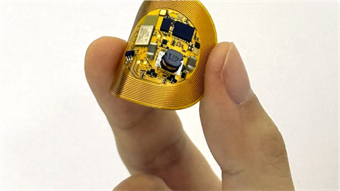
 The biosensor detects molecules linked to various cancers and neurological diseases. Image source: LNNanoThe single-layer organic nanometer-scale transistor on a glass slide uses the reduced form of the peptide glutathione (GSH), to react in a specific way on contact with the enzyme glutathione S-transferase (GST). The latter is linked to Parkinson’s, Alzheimer’s, breast cancer, and other diseases. The portable, low-cost transistor can be used for diagnostic purposes.
“This is the first time organic transistor technology has been used in detecting the pair GSH-GST, which is important in diagnosing degenerative diseases, for example,” says Carlos Cesar Bof Bufon, Head of LNNano’s Functional Devices & Systems Lab (DSF) and a member of the research team for the project. "The device can detect such molecules even when they’re present at very low levels in the examined material, thanks to its nanometric sensitivity.” A nanometer (nm) is one billionth of a meter (10-9 meter), or one millionth of a millimeter.
The device can also be configured to detect other substances, such as molecules linked to different diseases and elements present in contaminated material, among other applications.
Additional cost reductions for such point-of-care device are being sought by developing disposable paper-based biosensors. Gas-phase chemical polymerization technology is applied to impregnate paper with conductive polymers and impart electrical conductivity to the material. This conductivity can be adjusted by manipulating the element embedded in the cellulose fibers, depending on the application for which the paper is designed.