Drug-Test Microchip Stands in for Human Kidneys
Engineering360 News Desk | May 11, 2016The effects of different drug dosages on the human kidney can now be determined without the aid of a human kidney or animal models. A microfluidic device developed as a kidney-on-a-chip does the work of gauging safe drug doses on living kidney cells.
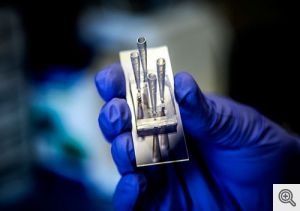 Microfluidic chip mimics medication flow through the kidney. Image source: Joseph XuAccording to University of Michigan researchers, up to two-thirds of intensive care patients experience a serious kidney injury, and medication is a contributing factor in 20% of those cases. By maintaining a precise flow of medication across cultured kidney cells, the microchip offers the benefit of providing more accurate dosing of potentially toxic medicines. The device simulates the body’s filtering process, providing a clearer understanding of how drugs behave and permitting researchers to alter the flow to study varying levels of kidney function.
A permeable polyester membrane and a layer of cultured kidney cells are encased between top and bottom compartments. Tests were conducted with the antibiotic gentamicin to compare a once-per-day high dose vs. a slow-releasing continuous dose in terms of kidney damage. The once-daily dose proved less harmful than a continuous infusion, even at the same overall dosage (see video).
In addition to optimizing drug regimens, the kidney-on-a-chip could help pharmaceutical companies test new products more efficiently and bring new medications to market faster.