New test detects harmful metals in food packaging
Marie Donlon | November 22, 2026Researchers from the Department of Food and Drug Engineering at Shijiazhuang College of Applied Technology in Hebei, China, have developed a method for detecting potentially harmful metals in regenerated cellulose food packaging.
The technique simultaneously measures cadmium, chromium, lead and titanium, which may be introduced into packaging materials during manufacturing or remanufacturing. Under certain conditions, these metals could leach into food, raising potential safety concerns.
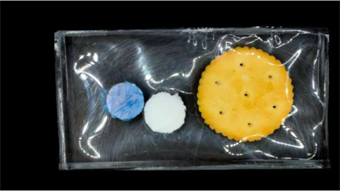
 Julia M Cameron/Pexels
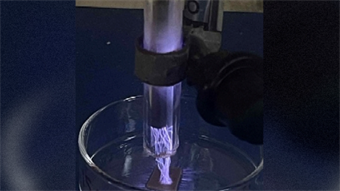
To detect the elements, the researchers first use microwave digestion, which exposes packaging samples to heated acidic reagents to break down the material and release any metals present. The resulting solution is then analyzed using inductively coupled plasma atomic emission spectrometry (ICP-AES). This technique sprays the sample solution into an extremely hot argon plasma, which causes metallic elements to emit light at characteristic wavelengths. Researchers can identify the elements by measuring these unique light emissions.
The process is similar in principle to the flame tests commonly performed in school laboratories, in which the color of a flame helps identify specific metals, but offers a more advanced and precise analytical approach.
When the researchers tested five commercially available regenerated cellulose packaging samples, none contained metal concentrations above established safety thresholds. However, this finding does not guarantee all such packaging is free of potentially harmful contaminants.
Unlike most conventional plastic packaging, regenerated cellulose is plant-derived and biodegradable, but its production may involve chemical additives and other substances that warrant safety evaluation. Improved detection methods are needed to strengthen routine monitoring and support consistent enforcement of industry regulations.
The researchers optimized the digestion process to fully break down samples and validated the method’s sensitivity, reporting detection limits as low as 1.96 micrograms per kilogram (μg/kg). They said the approach could serve as a rapid screening tool for manufacturers and regulators evaluating cellulose-based packaging.
An article detailing the findings, “Study on detection method for harmful chemical residues in regenerated cellulose food packaging materials,” appears in the International Journal of Environment and Pollution.