Discarded coffee powers a breakthrough in 3D-printed architectural design
Marie Donlon | November 25, 2026Researchers at the Royal Melbourne Institute of Technology (RMIT) in Australia have developed a biodegradable 3D-printing filament made with spent coffee grounds for creating architectural structures with a lower environmental footprint.
Led by Baohua Jia of RMIT’s School of Science and Nic Bao of the School of Architecture and Urban Design, the team developed the material as part of the Waste to Form project. Architectural forms produced using the filament were showcased at Melbourne Design Week.
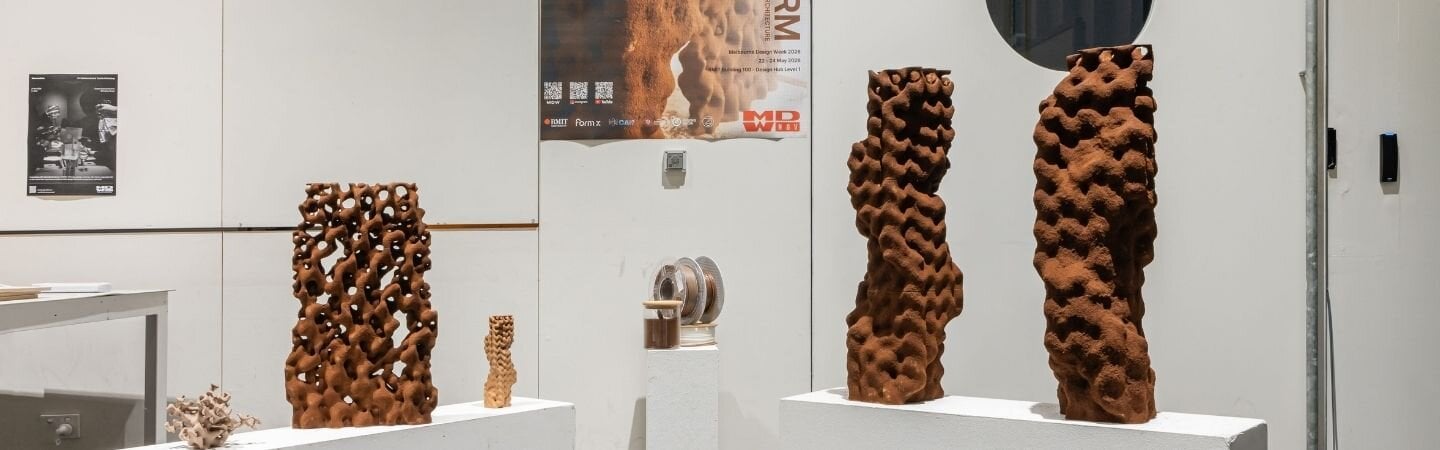 Source: RMIT University
Melbourne’s cafes produce large amounts of spent coffee grounds, most of which are discarded. Meanwhile, 3D printing generally depends on plastic filaments, and Jia said the team sought greener alternatives.
The researchers selected coffee grounds because coffee is a rich biomaterial with potential for biodegradation and agricultural use as a fertilizer, Jia explained.
Beyond making the filament biodegradable, the coffee grounds increased the material’s strength, Jia said. Team member Kang Liu added that the material can also support sound absorption and insulation.