How to select a reliable high-power DC power supply
October 08, 2026In industries such as new energy, automotive electronics, energy-storage batteries, LED lighting and automated test equipment (ATE) testing, high-power programmable DC power supplies serve as core instruments for laboratory R&D, product validation and production-line aging tests. A reliable power supply can not only deliver stable voltage and current but also simulate complex operating conditions and protect costly devices under test (DUTs). Poor selection, by contrast, may lead to unstable outputs, disordered timing sequences and failed protection mechanisms, which can directly damage test samples and delay project progress. Faced with numerous models on the market, how can you avoid parameter pitfalls and pick a high-power power supply suited to real-world requirements? Comprehensive evaluation should be carried out across seven dimensions: power specifications, channel configuration, core performance, functional features, safety protection, interfaces and expandability, and practical application scenarios.
Clarify power, voltage and current; prioritize auto-ranging output capability
The first step of selection is to look beyond the nominal maximum-power label. Calculate the matching relationship between voltage, current and power according to the actual working conditions of the DUT. For engineering selection, it is recommended to reserve a power margin of 1.3 to 1.5 times the maximum power consumption of the DUT to cope with instantaneous peak values. A common pitfall with many users lies in conventional fixed-range power supplies: once reaching the rated voltage, they deliver maximum current, yet output power drops as voltage decreases, resulting in low power-utilization efficiency under low-voltage high-current conditions.
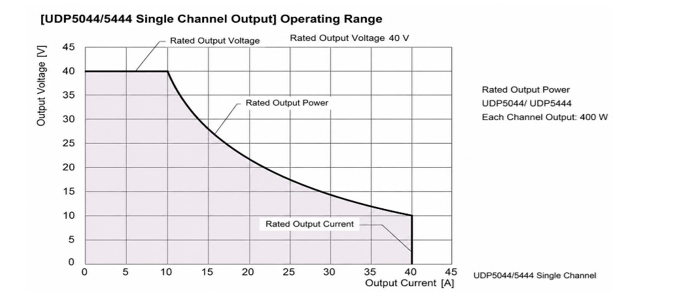 Figure 1: UDP5044/5444 Single Channel Output. Source: Uni-Trend U.S.
Give priority to models with auto-range wide-range output. Within the rated total-power limit, the unit can automatically raise output current as voltage drops. A single unit can cover more test conditions and reduce procurement costs for multiple power supplies. Take the UDP5000 series as an example: models are rated from 400 W to 2,000 W. Constrained by its power-rating curve, it realizes high-current output at low voltage and high-voltage output at low current. One power curve covers a wide range of test points. When purchasing, always check the product’s output operating-range curve and confirm whether the required current can be achieved at frequently used voltage points. Avoid models with impressive nominal parameters that fail to meet specifications under real-world operating conditions.
Channel configuration: Select single-channel, dual-channel or triple-channel as required
Many DUTs require multi-rail power supply, such as FPGAs, battery-management systems (BMS) and multi-rail circuit boards. Compared with multiple single-channel power supplies, multi-channel units feature a compact footprint, synchronous timing and centralized control.
For dual-channel and triple-channel models, each channel should ideally be electrically isolated, supporting both independent channel control and coordinated linkage. Meanwhile, pay attention to channel series-parallel expandability: parallel connection boosts total output current while series connection elevates output voltage. Some models support external series-parallel expansion of multiple complete units to further increase system power for high-power test systems. Note that certain high-voltage variants do not support series connection; check specification restrictions carefully during selection.
In parallel mode, outputs from multiple channels are combined for higher total current. In series mode, two channels stack for higher output voltage, while remaining channels can still operate independently, flexibly adapting to diverse test requirements.
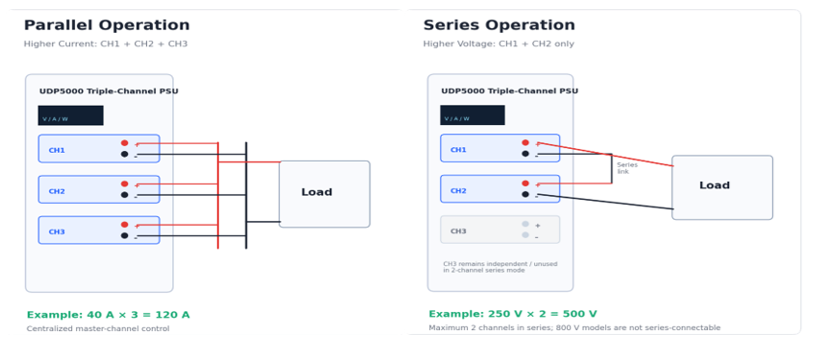 Figure 2: Parallel and series operation. Source: Uni-Trend U.S.
Dynamic performance determines the authenticity of test simulation
A high-power power supply does more than supply power. For many scenarios it must replicate real-world dynamic characteristics of batteries, photovoltaic panels and fuel cells, making dynamic-performance metrics critical.
First, adjustable slew rate. Users can custom-define voltage and current rise/fall rates to suppress output overshoot and protect sensitive DUTs. Both constant-voltage (CV) priority and constant-current (CC) priority modes should be supported: CV priority enables fast voltage establishment, whereas CC priority suppresses current overshoot. Switch between modes according to load characteristics.
Second, multi-channel synchronous timing. Multi-rail devices have strict power-on / power-off timing requirements. Output-delay metrics between channels are essential. High-quality power supplies achieve inter-channel output delay below 0.1 ms for channels of identical voltage. Programmable power-on/power-off delay is also supported to replicate real-world device startup-shutdown logic, which is especially vital for BMS and SoC chip testing.
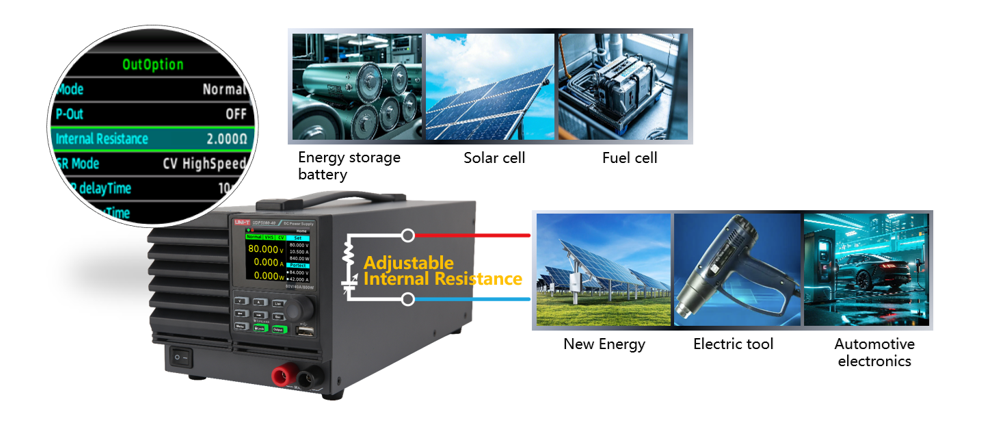 Figure 3: Adjustable internal resistance. Source: Uni-Trend U.S.
Third, the adjustable internal-resistance simulation function adds value for new-energy testing. The power supply can be set with a variable internal resistance — scaled per model, reaching around 300 Ω on high-voltage, low-current units and milliohm ranges on low-voltage, high-current units — to simulate source-internal-resistance characteristics of batteries and photovoltaic panels. Without external resistors, source-side voltage-drop behavior can be reproduced for BMS verification, greatly simplifying test-setup complexity.
Protection mechanisms safeguard valuable DUTs
Under high-power-test conditions, batteries, circuit boards and controllers under test are often high-cost. Comprehensive protection represents the reliability baseline for power supplies. Basic features must include over-voltage protection (OVP), over-current protection (OCP), over-power protection (OPP) and over-temperature protection (OTP), with user-configurable threshold values instead of fixed hard-coded limits.
Beyond alarm-triggered shutdown, look for a built-in discharge-load function. After tests are completed, residual voltage at output terminals can be actively released to mitigate risks to operators and samples. Remote-sense compensation should not be overlooked either: high-current operation creates voltage drop across output cables. Remote-sense samples voltage directly at the load end to compensate for cable loss and guarantee voltage accuracy at the DUT.
Programming, communication and human-machine interaction for automated testing
R&D and production-line tests increasingly demand automated control. The programmability of a power supply determines ease of system integration.
On the hardware side, evaluate human-machine-interface experience: a color TFT-LCD screen is preferred, capable of simultaneously displaying set-values, actual voltage/ current/power, operating mode and protection status. Intuitively-laid-out keys reduce setup errors.
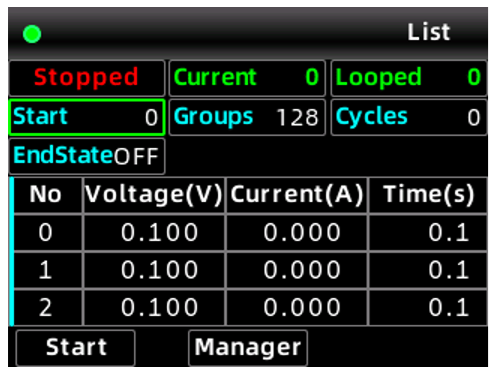 Figure 4: Compatibility with the SCPI communication protocol enables remote control via host-computer software or scripts for ATE integration. Source: Uni-Trend U.S.
In terms of software capabilities, focus on the list sequence mode, which supports multi-step voltage-current-time programming with up to 128 groups and cyclic operation to automatically reproduce dynamic working profiles. Preset-storage functions should save up to 32 user-defined configurations for one-click parameter recall across different DUTs and improved debugging efficiency.
For interfaces, LAN and USB ports are essential, alongside an external analog interface accepting 0 to 10 V analog control signals for PLC integration. Compatibility with the SCPI communication protocol enables remote control via host-computer software or scripts for ATE integration. Some models offer a web-based control interface for browser-operated access without dedicated software installation.
Trade-offs oriented to industry-specific application scenarios
Power-supply priorities vary by industry:
- Battery, energy-storage and BMS testing: Emphasis on variable-internal-resistance simulation, sequence programming, multi-channel timing control and comprehensive protection.
- Automotive-electronics testing: Wide-voltage coverage, high-voltage output support, adjustable slew rate and remote-sense compensation.
- Photovoltaic and fuel-cell simulation: Auto-range output, dynamic response and source-internal-resistance simulation.
- General-purpose laboratory R&D: Multi-channel capability, flexible series-parallel operation and user-friendly local operation.
- Production-line ATE testing: SCPI-compliant communication, stable long-duration runtime and preset-parameter storage.
Conclusion
Many engineers only evaluate nominal voltage, current and power while ignoring range curves, dynamic response, synchronous timing, protection logic and communication protocols. Units delivered may consequently fail practical requirements. Do not rely solely on marketing brochures during selection. Carefully review datasheets for power-range curves, inter-channel delay, slew-rate specifications, protection types and communication protocols. Where possible, test sample units under real-world operating conditions to validate output behavior, timing sequences and protection functions.
A reliable high-power DC power supply is more than just a power-delivery device — it is a simulation-and-test platform. By reasonably assessing power margin, channel count, dynamic indicators, safety safeguards and automation capabilities, users can select a unit suited to long-term stable operation for R&D validation and production-line testing.
Note: Illustrations referenced are from Uni-Trend U.S. UDP5000 multi-channel programmable DC power supply.
UNI-T U.S. supports North American customers from Fort Worth, Texas. The UDP5000 series covers 20 models from 40 V to 800 V and 400 W to 2,000 W, all sharing the same front panel and command set. Datasheets, the full model matrix and a selection guide are on the Uni-Trend U.S. website.