Understanding transient flow in high-viscosity pumps
Jody Dascalu | September 08, 2026Progressive cavity pumps (PCPs) are traditionally used to move high-viscosity and non-Newtonian fluids in applications such as polymer processing, slurry handling, coatings and additive manufacturing.
Unlike centrifugal pumps, PCPs operate through a positive displacement mechanism, in which sealed cavities rotate against the pump orifices to create low and high pressure zones. Because the cavities maintain constant volume during operation, PCPs generate lower pulsation and lower shear stress than many centrifugal or reciprocating pump systems.
PCPs are far from perfect, however. Pump behavior changes significantly under transient operating conditions, which creates leakage, pressure pulsation and localized shear variation. Until recently, these have been difficult to design for, which has at times hindered PCP consideration for otherwise-suitable applications.
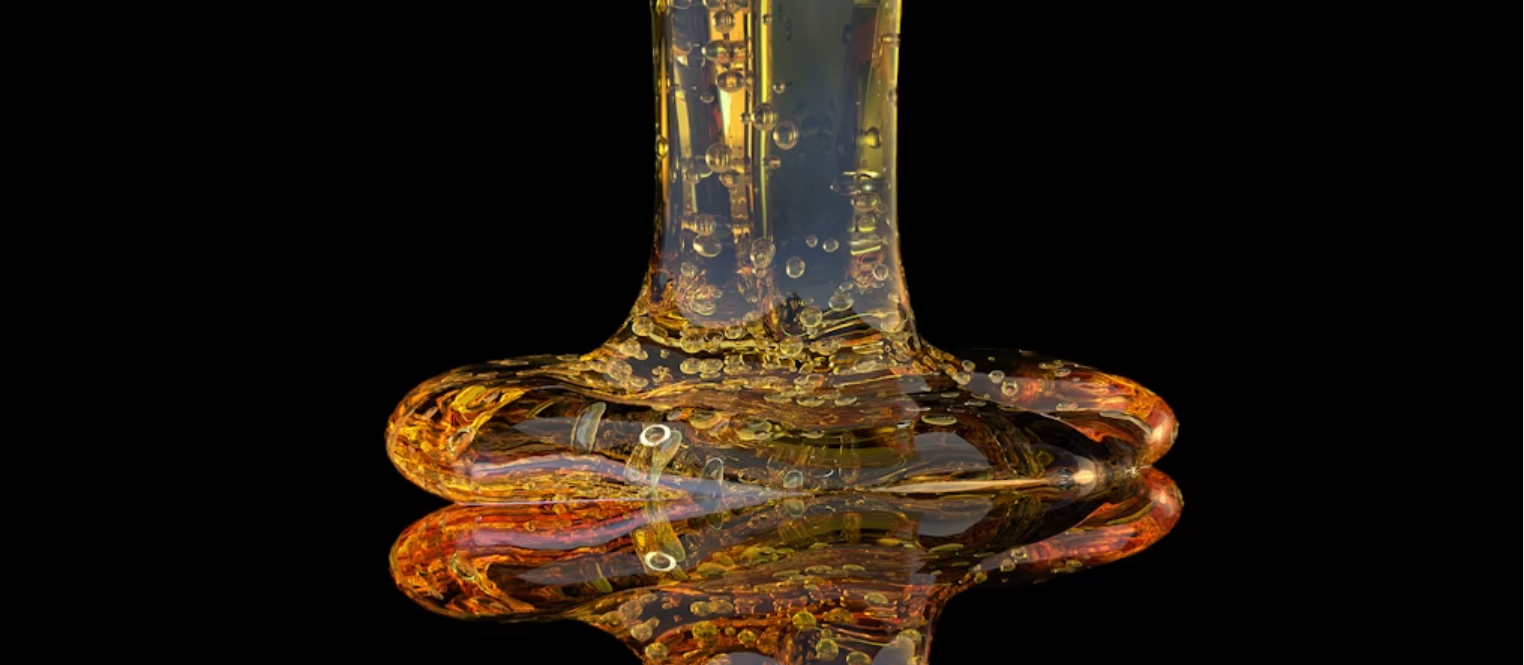 Viscous amber fluid pours and pools against a black background. Source: Buddha Elemental 3D/Unsplash
Viscous fluid handling mechanisms in progressive cavity pumps
In PCPs, a single-helix rotor rotates eccentrically within a double-helix elastomer stator. This design creates sealed cavities that continuously progress from the inlet to the discharge side of the pump.
Under transient operating conditions, however, the internal flow behavior becomes considerably more complex. Pressure fluctuations, variable rotational speeds and startup or shutdown cycles can alter sealing behavior between the rotor and stator, producing internal leakage commonly referred to as slip. This backflow becomes more significant at high differential pressures or when handling non-Newtonian fluids whose viscosity changes with localized shear conditions.
Additionally, pump elastomer seals may deform under mechanical and thermal loading, which can further affect cavity shape and efficiency.
Evaluating these effects requires transient CFD, fluid-structure interaction modeling and deformation analysis. These analytical approaches replace simplified steady-state assumptions to provide a more accurate representation of pressure distribution, leakage behavior and flow stability under real operating conditions.
As models advance, so do PCPs
Recent advances in transient flow modeling have improved the ability to simulate PCPs under dynamic conditions. Modern computational studies focus on capturing transient effects such as pulsation, localized recirculation, viscosity variation caused by shear gradients and changing rotor-stator interactions during operation.
Steady-state models often assume stable and uniform operating conditions, while transient simulations evaluate how internal flow structures evolve over time as pressures and rotational speeds fluctuate. This allows researchers to analyze in a new way. These modeling approaches are particularly important during startup conditions and high-pressure operation, where fluid inertia and rapid pressure changes place increased stress on pump components.
Advanced CFD techniques, including overset mesh and moving boundary simulations, examine slip flow, cavity pressure variation and localized deformation with significantly greater precision than conventional methods. Simulation data also demonstrates that increasing viscosity and pressure differentials can substantially reduce volumetric efficiency, especially due to elastomer deformation as pump speeds increase.
Data from these simulations shows that fluid behavior changes significantly as viscosity increases under variable operating conditions. Pump shape, internal flow paths and pressure differentials all influence volumetric efficiency.
Transient flow models like these have a direct impact on bottom lines. It reduces waste, increases dosing consistency, reduced mechanical wear and offers a better prediction of pump behavior under changing process conditions.
Automation and research states
This criteria makes it transient flow models optimal for processes like polymer extrusion, wastewater sludge handling, mining slurries and battery material production. In applications involving food pastes, coatings or high-viscosity inks for additive manufacturing, subtle pressure fluctuations or inconsistent flow rates disrupt dosing accuracy and drive up downtime.
As industrial infrastructure shifts toward full automation, pumping equipment must self-adapt to shifting system states rather than operating on fixed variables. Transient flow analysis is also the the foundation for digital twins and predictive maintenance frameworks. Integrating these dynamic models into active control systems allows for real-time adjustments to viscosity shifts and pressure spikes, protecting components from premature wear while securing consistent throughput.
Current research is increasingly focused on integrating real-time sensor data with transient flow analysis to improve adaptive pump control. For example, embedded pressure and temperature sensors provide continuous operating data that feeds into predictive control systems, which will adjust rotational speed or pressure conditions before flow instability occurs. Research is also examining new sealing materials with greater resistance to thermal and pressure-related deformation, which helps maintain sealing performance and volumetric efficiency over longer operating periods.
Future studies will likely expand toward more detailed multi-phase flow modeling for fluids containing entrained gases or varying solid concentrations. Combined with digital twin systems and advanced CFD analysis, these approaches could allow industrial processes to operate closer to design limits while reducing the risk of instability or mechanical failure.
As these modeling techniques mature, transient flow analysis is expected to become a standard part of automated fluid handling and process optimization in high-viscosity pumping applications.