Crystalline alloys at the cutting edge
Jon Lowy | July 21, 2026Crystalline alloys are built from acts of microscopic magic that fundamentally alter the macroscopic function of bulk materials. They have long formed the backbone of edged weapons and are increasingly important in structural engineering, aerospace innovation and high-performance applications across many sectors.
With the convergence of computational modeling, materials engineering and novel processing techniques, crystalline alloy development is entering a transformative phase. From turbine blades to quantum computers, crystalline metals are evolving to meet demands for higher strength-to-weight ratios, greater corrosion resilience, enhanced thermal stability and even integrated functional properties, like magnetic field flow control or superconductivity.
Any exploration of the crystalline alloy design frontier must focus on how researchers are manipulating atomic-scale structures, leveraging machine learning and discovering new alloy classes that redefine performance across industries.
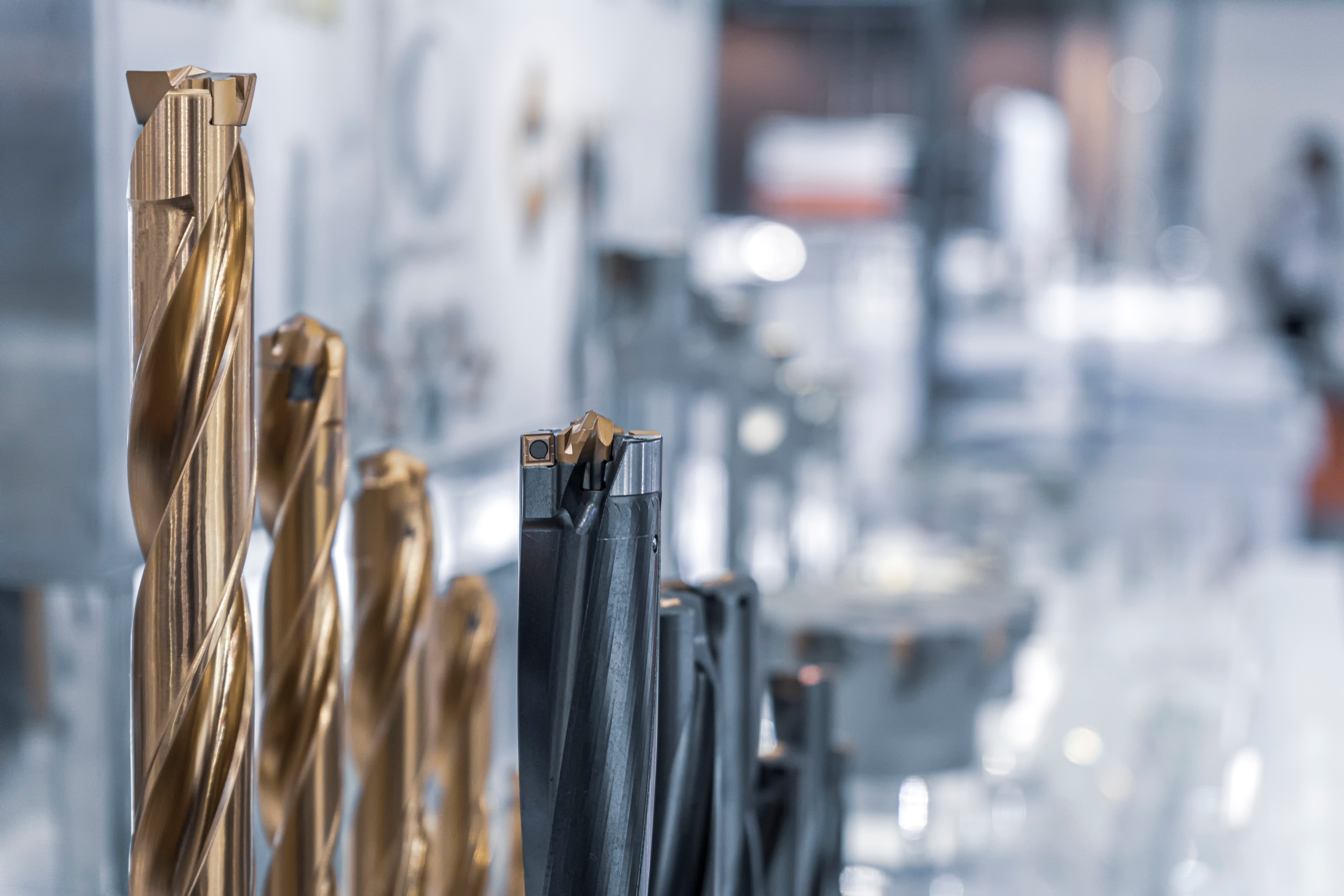 One of the primary applications of crystalline alloys is the application of wear-resistant coatings onto cutting tools, extending operational life by limiting abrasive wear. Source: CHOKCHAI/Adobe Stock
The science of crystalline structures
Crystalline alloys typically derive the altered properties that differentiate them from their pure constituents through their internal atomic arrangement.
Among the earliest innovations is furnace-heating a blade encased in carbon-rich materials to diffuse the carbon atoms into the surface as a primitive form of carburizing. Carbon disrupts the crystalline lattice of steel, adding hardness and toughness. The origin of this and other empirical methods long predates the physical chemistry knowledge that today defines them and allows precise control of structures at an atomic level.
Traditional alloy development focused on manipulating bulk properties: tensile strength, hardness or fatigue resistance by partially adopting constituent material properties in the alloy. This has proved an effective strategy but reaches the limitation of the absolute properties of constituents in their natural crystalline state. Manipulating crystal lattices can force materials toward extreme properties that break this paradigm.
Today, through tools like transmission electron microscopy, electron backscatter diffraction (EBSD) and high-performance machine learning/artificial intelligence (ML/AI) modeling, researchers now target precise crystal configurations, grain boundary manipulations and phase interactions.
Two key microstructural aspects drive innovation. The first is grain size and orientation: finer grains can increase strength via the Hall-Petch effect, while grain boundary engineering can improve ductility and resistance to intergranular corrosion. The second is phase stability and transformation, whereby new modes such as Laves phases, ordered intermetallics or precipitate-strengthened zones contribute to wear and creep resistance.
This results in a new generation of crystalline alloys that are custom-tailored at the atomic level to meet specific environmental and mechanical demands. This is the high-impact real-world embodiment of what, at first glance, appears to be just more interesting science. The custom tailoring of alloy structures to tasks is a wedge technology that may change the world.
A number of tools and techniques are greatly advancing crystalline alloy innovation.
Trend 1: High-entropy alloys (HEAs)
One of the most explored and rapidly developing areas is high-entropy alloys. Unlike traditional alloys that are dominated by a single base element, like iron in steel or nickel in superalloys, HEAs combine five or more principal elements in near-equal proportions.
The leap in understanding that broke the mold of traditional, primary base-plus-solutes alloys is control of the high-entropy effect. This arises from several elements in near-equiatomic ratios, raising the configurational entropy of the alloy. This promotes a stable, solid-solution phase and hinders the formation of indeterminate and uncontrolled intermetallic compounds. Mechanical alloying and careful control of cooling rates during solidification deliver uniform microstructure and bulk consistency in properties.
These alloys form simple crystalline structures, such as face-centered cubic (FCC) or body-centered cubic (BCC), and the configurational entropy stabilizes the phase and properties.
Refractory HEAs serve in aerospace and nuclear applications due to their high-melting points and oxidation resistance. Lightweight HEAs integrating aluminum, titanium and magnesium are increasingly used in automotive and aerospace structures. Magnetic HEAs combine cobalt, iron and nickel for energy and actuator systems.
HEAs are notable for their property enhancements beyond any of their constituents, but also for their alloy design and property-tuning potential. With millions of combinations possible, computational screening and machine learning serve to predict the compositional properties prior to physical trials.
Trend 2: Nanostructured and ultrafine-grained alloys
As grain size is reduced to the nanoscale (less than 100 nm), metals often exhibit significant improvements in hardness, strength and wear resistance. Nanostructured crystalline alloys — typically resulting from severe plastic deformation, electrodeposition or powder metallurgy — are finding roles in the most demanding applications.
Wear-resistant coatings on tools and cutting dies increase their functional life, while adding modestly to initial manufacturing costs. Bulk properties in high-strength aerospace parts with ultrafine microstructures are in increasing demand at the leading edge of engine, airframe and control surface development, all of which benefit from improving economies of scale. These economies will rapidly bring such alloys into the mainstream.
Bio-compatible implants are being increasingly enhanced by nanograin structures that reduce corrosion, improve fatigue strength and selectively induce or prevent tissue adhesion. This is exemplified by the formation of hemidesmosomes and basal lamina microstructures to allow epithelial cells to couple to dental implants, forming an organic barrier.
A key challenge of nanostructured alloys is thermal stability. Nanograins tend to grow over time, diminishing the hard-won property improvements. To combat this, researchers are using additional alloying elements that stabilize grain boundaries or form nanoscale precipitates and highly controlled intermetallics that lock structures in place by pinning crystal growth.
Trend 3: Additive manufacturing of crystalline alloys
Additive manufacturing, or 3D printing, is driving an approach to crystalline alloy design. Laser powder bed fusion and directed energy deposition allow for tailored microstructures and even on-the-fly alloy modifications and progressive property sequencing during build-up. Recent breakthroughs offer some significant avenues for material design.
Functionally graded materials are constructed with gradual and step changes in composition or crystal structure, to regionalize and orient anisotropic properties for optimized part performance.
In-situ alloying involves base powders being locally mixed and melted during printing, enabling new compositions and another form of property-regionalization.
Control over cooling rates and cooling axes can influence dendritic growth, grain orientation and residual stresses, delivering highly oriented and specialized crystalline forms, for complex property benefits and extreme anisotropy.
Additive manufacturing lets engineers create previously unmanufacturable material constructs with oriented grain, variable lattice structures and customized stress profiles.
Trend 4: Twinning-induced plasticity (TWIP) and transformation-induced plasticity (TRIP) alloys
TWIP and TRIP alloys represent a class of high-strength steels and metallic systems that rely on controlled deformation mechanisms to enhance mechanical performance. TWIP benefits from crystal structures formed in symmetrical mirror regions, improving ductility. TRIP creates austenitic phases that transform to martensitic structures in response to load, increasing strength.
Originally developed for automotive crash-resistant components, these alloys are being refined for next-gen vehicle chassis and suspension parts, energy absorbers in aerospace structures and high-impact tooling and defense materials. Their greatly superior energy absorption and high strain hardening compared with simpler materials make TWIP/TRIP alloys ideal where the typically incompatible need for strength and formability are both critical requirements.
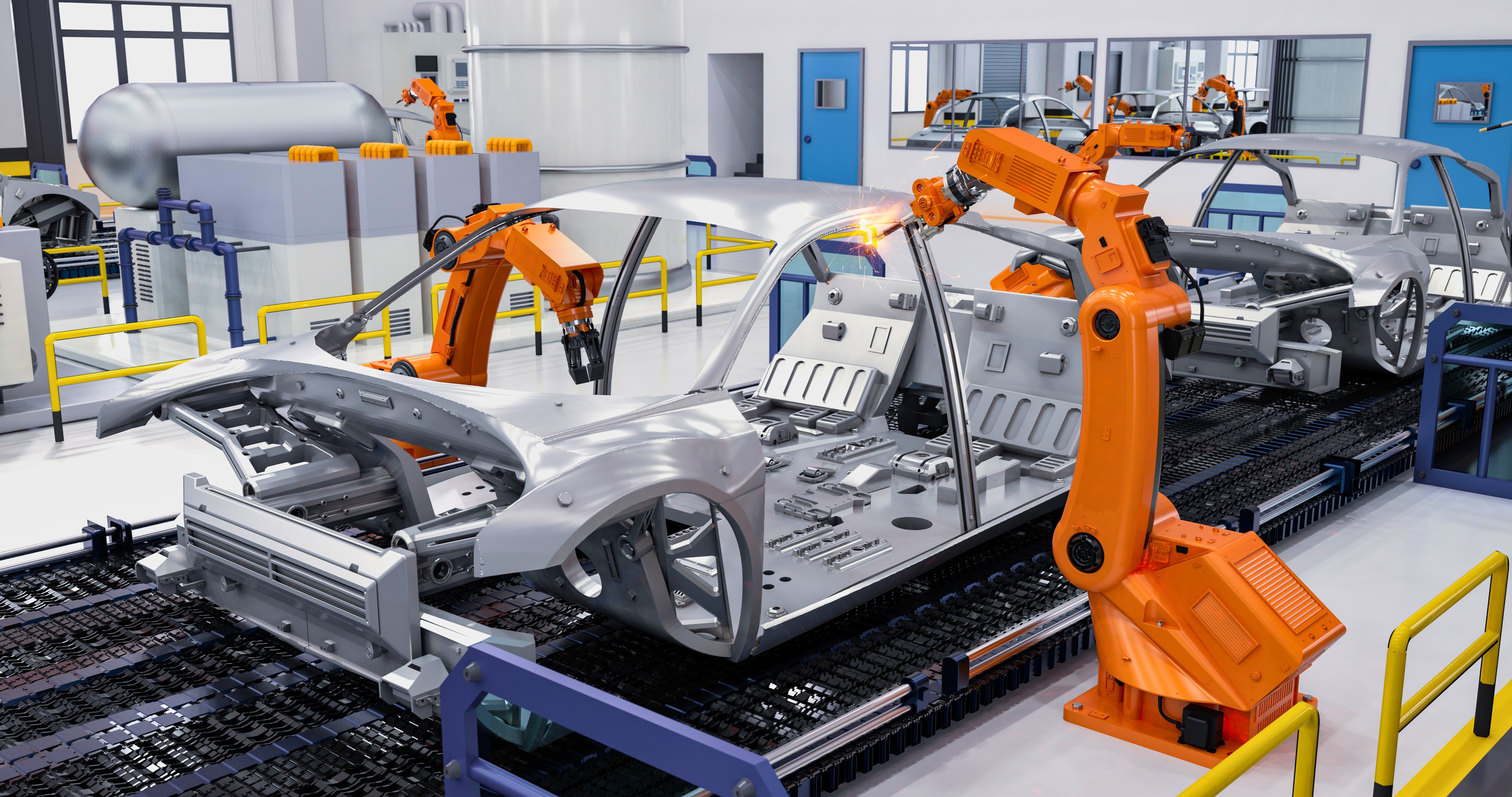 Crystalline alloys are increasingly important in structural engineering, aerospace innovation and even high-performance automotive applications. Source: Umangrafz/Adobe Stock
Trend 5: Grain boundary engineering and thermomechanical processing
Traditional alloy design treats grain boundaries as static defects to be tolerated or compensated for. Increasingly, they are now being understood as design parameters. By controlling grain boundary type, orientation and energy through grain boundary engineering, materials designers can tailor corrosion resistance fatigue life and fracture toughness with high degrees of control.
Thermomechanical processing — a blend of controlled rolling, forging and heat treatments — can encourage the formation of novel grain boundaries such as Σ3 twins in stainless steel, reducing susceptibility to cracking and corrosion.
Shaping the future
Crystalline alloys are pushing the frontiers of quantum computing and spintronics. Alloys with precise crystalline order and low defect densities are vital for magnetic tunnel junctions in memory storage, superconducting qubits requiring cryogenic stability and thermoelectric and magnetocaloric materials that depend on electron-spin and phonon behavior.
New alloy classes such as Heusler compounds, half-metallic ferromagnets and topological crystalline insulators are under active exploration for these advanced applications. While challenges remain, particularly in scalability, cost (notably with HEAs) and thermal stability of nanograins and metastable phases, steady advances are mitigating these hurdles. Progress in recycling, alloy substitution and process optimization is improving feasibility. Collaboration among computational scientists, metallurgists and industrial engineers continues to accelerate commercialization.
Crystalline alloys are more than strong metals; they are solutions engineered to extreme performance demands, designed from the atomic level up. Whether enabling gas turbines operating above 1,000° C, powering next-gen electronics or reducing mass in space systems, crystalline alloys are central to material innovation. The coming decade will likely bring alloys that not only outperform today's materials, but also adapt, self-heal and respond intelligently to their environments.