The most common errors in pH measurements and how to avoid them
Kajal Jaiswal | July 21, 2026 Accurate pH measurement depends on proper electrode care, correct calibration with fresh buffers and mindful temperature compensation to avoid common errors. Source: METTLER TOLEDO
pH measurement is a fundamental process in many scientific, industrial and environmental applications. If you are working in a laboratory, in food and beverage production, pharmaceuticals or water quality testing, accurate pH readings are crucial for ensuring product quality, safety and process control. Measuring pH is a task many of us deal with, and it sounds simple — just dip a probe and read a number — but anyone who’s done it knows it’s not always that straightforward. Small mistakes can throw off results, leading to confusion and sometimes costly errors.
In this article, we will explore the most common errors encountered in pH measurements, understand why they happen and discuss best practices to minimize these errors for more reliable results.
1. Improper electrode maintenance and storage
The pH electrode is the heart of the measurement system, and its condition directly affects accuracy. One of the most frequent mistakes is neglecting proper maintenance.
- Drying out: pH electrodes contain a glass membrane that must stay hydrated to function correctly. If left dry, the electrode’s response becomes sluggish or unstable.
- Contamination: Residues from previous samples can coat the electrode surface, causing drift or erroneous readings.
- Storage: Electrodes must be stored in appropriate storage solutions (usually a potassium chloride-based pH electrode storage solution) rather than distilled or deionized water, which can damage the electrode.
Tip: Always rinse the electrode with distilled water after each use and store it properly using METTLER TOLEDO Maintenance and Storage solution to maintain responsiveness and longevity.
2. Calibration errors
Calibration is essential for accurate pH measurement, but incorrect calibration is one of the most common errors.
- Using expired or contaminated buffers: pH buffers should be fresh and uncontaminated. Old or reused buffers can shift in pH and cause inaccurate calibration.
- Improper buffer selection: For many applications, a two-point calibration using buffers that bracket the expected pH range is recommended (e.g., pH 4 and pH 7 or pH 7 and pH 10).
- Ignoring temperature effects: pH readings are temperature-dependent. Calibration buffers and samples should be at the same temperature, or temperature compensation must be applied. Ignoring temperature effects leads to inaccurate readings because pH is temperature-dependent, affecting both the sample and calibration buffers. Use meters with automatic temperature compensation (ATC) or manually adjust accordingly
Tip: Calibrate a pH meter daily or before critical measurements, using fresh, appropriate METTLER TOLEDO buffers and ensuring temperature consistency.
3. Inadequate sample preparation
The accuracy of pH measurement depends heavily on the nature of the sample.
- Sample homogeneity: Inhomogeneous samples, such as suspensions or emulsions, may give unstable readings.
- Sample temperature: Measuring samples with temperatures different from calibration buffers without temperature compensation introduces error.
- Interfering substances: High ionic strength, presence of organic solvents or other chemical interferences can alter electrode response.
Tip: Mix samples thoroughly, measure temperature and if possible, dilute or filter samples to reduce interference.
4. Poor electrode condition or aging
Electrodes degrade over time, which impacts measurement quality.
- Glass membrane damage: Scratches, cracks or chemical attacks can compromise accuracy.
- Junction clogging: The reference junction can become clogged, causing slow response and unstable readings.
- Reference electrode drift: The internal reference can age or become contaminated.
Tip: Regularly inspect electrodes, run performance checks, and replace electrodes when response time slows or drift occurs. METTLER TOLEDO’s InLab DES digital sensors (probes) with diagnostic capabilities ensure reliable and reproducible results.
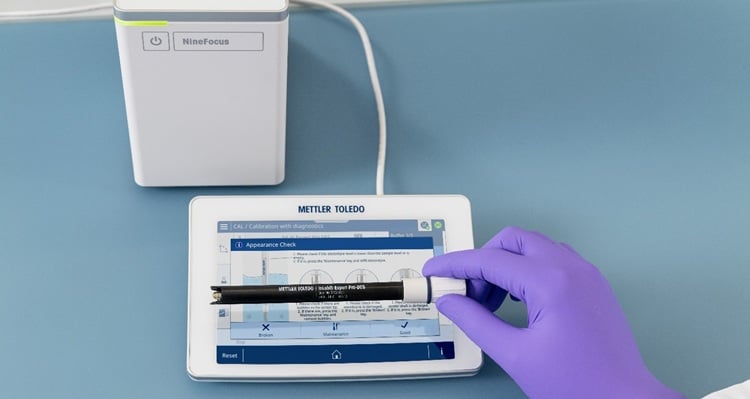 Smart digital sensor displaying diagnostic capabilities to ensure reliable and reproducible results. Source: METTLER TOLEDO
5. Misunderstanding temperature compensation
Because pH is temperature-dependent, new pH meters include temperature compensation features.
- Not using temperature compensation: Leads to errors, especially when measuring samples at temperatures different from calibration buffers.
- Using manual temperature compensation incorrectly: Errors can occur if the temperature probe is not in thermal equilibrium with the sample.
Tip: Use ATC whenever possible and ensure the temperature sensor is properly immersed in the sample. METTLER TOLEDO’s InLab DES digital sensors are equipped with a built-in temperature probe for integrated temperature measurement during analyses, except for a few DES sensors.
6. Inappropriate measurement technique
The way measurements are taken can introduce errors.
- Not allowing stabilization: Taking readings before the electrode stabilizes results in erroneous values.
- Incorrect electrode immersion depth: Insufficient immersion or touching container walls can distort readings.
- Ignoring electrode response time: Patience is key; rushing the measurement process undermines accuracy.
Tip: Allow the reading to stabilize, immerse the electrode properly and avoid movement during measurement.
Conclusion
Accurate pH measurement is critical across many fields and applications, but common errors can compromise the integrity of data. By taking good care of your electrode, calibrating properly, preparing samples well, being aware of electrode aging, compensating for temperature and taking your time during measurement, you’ll avoid the most common errors.
Investing time in understanding these common pitfalls and adopting best practices not only enhances data quality but also extends electrode life and reduces overall operational costs. After all, accuracy matters — and a little care goes a long way.
If you are looking to gain a thorough understanding of the typical mistakes made in pH measurements and how to prevent them, download METTLER TOLEDO’s Good Electrochemistry Practice Recommendation (GEPR). Additionally, if you're interested in learning proper electrode care and calibration techniques, watch this video series on pH handling.
For further assistance or inquiries, please reach out to pHmatters@mt.com