Spider silk-inspired method transforms corn protein into ultra-tough plastic alternative
Marie Donlon | May 27, 2026A team of scientists has devised a spider silk inspired process for transforming a corn protein into a plastic-like material for biodegradable food packaging wraps to help reduce environmental waste.
The scientists turned to a corn protein called zein, which is abundant, renewable and naturally hydrophobic. Because the material is also relatively brittle, the team took inspiration from the way spiders spin their silk to improve the zein’s mechanical strength.
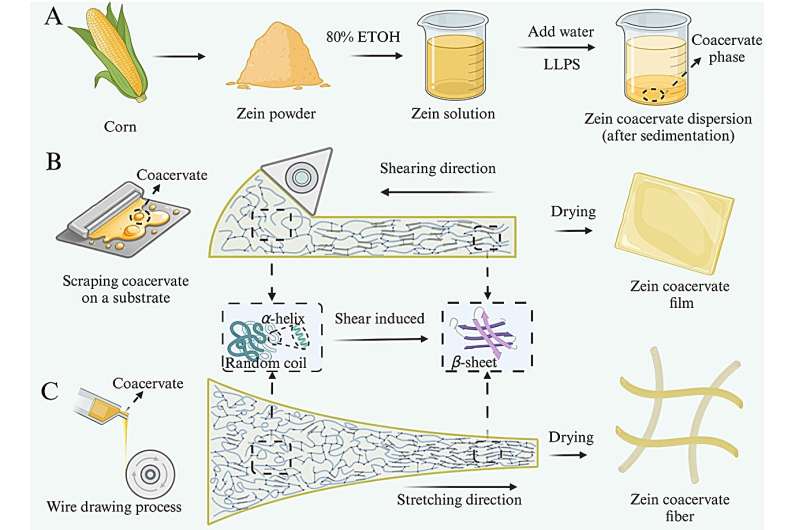 Source: Nature Communications (2026). DOI: 10.1038/s41467-026-72645-9
Spider silk is incredibly tough and capable of stretching and absorbing significant amounts of energy without snapping. It even reportedly outperforms steel in terms of toughness. This is because spiders process protein solutions via narrow spinning ducts where shear flow and chemical conditions encourage the alignment of the proteins into strong, silk-like fibers.
As such, the team applied this process to zein using an industry-standard film applicator, which was used to spread a liquid version of zein — developed by blending the protein powder with water and alcohol — across a flat surface at controlled speeds.
When the protein mixture passes under the applicator blade, a shearing force is exerted on the fluid by the blade’s edge. This action compelled coiled proteins to uncoil and lock together, thus mimicking the way in which spider glands align silk molecules to build strength.
The resulting dried films and fibers were put through an assortment of strength tests, where they were stretched until they broke. The team determined that these films were twice as strong as standard plant films, thus rivaling the rigidity of wood and natural silk.
"The resulting materials demonstrate a rigidity comparable to silk and even exhibit good oxygen and moisture barrier properties," the team explained.
To determine if the material prevents food spoilage, the team wrapped fresh bananas in a zein film and then stored them under accelerated aging conditions. The film blocked out oxygen and moisture, which prevented the fruit from browning. When the material was submerged in a lab-based soil mixture, 60% to 80% of the material naturally degraded within a month.
The process is detailed in the article, “Silk-Inspired Design and Manufacturing of Robust Plantymers,” which appears in the journal Nature Communications.