Crushed oyster shells help create ultra-light magnesium foam for vehicles, armor
Marie Donlon | June 16, 2026A magnesium foam derived entirely from natural marine raw materials and designed potentially for automotive manufacturing or protective gear applications has been developed by a team of researchers at Helmholtz-Zentrum Hereon.
According to the developers, no toxic additives are required for the production of the foam. Rather, ground oyster shell powder, which is a product of the food industry, functions as the blowing agent.
 Source: Helmholtz-Zentrum Hereon
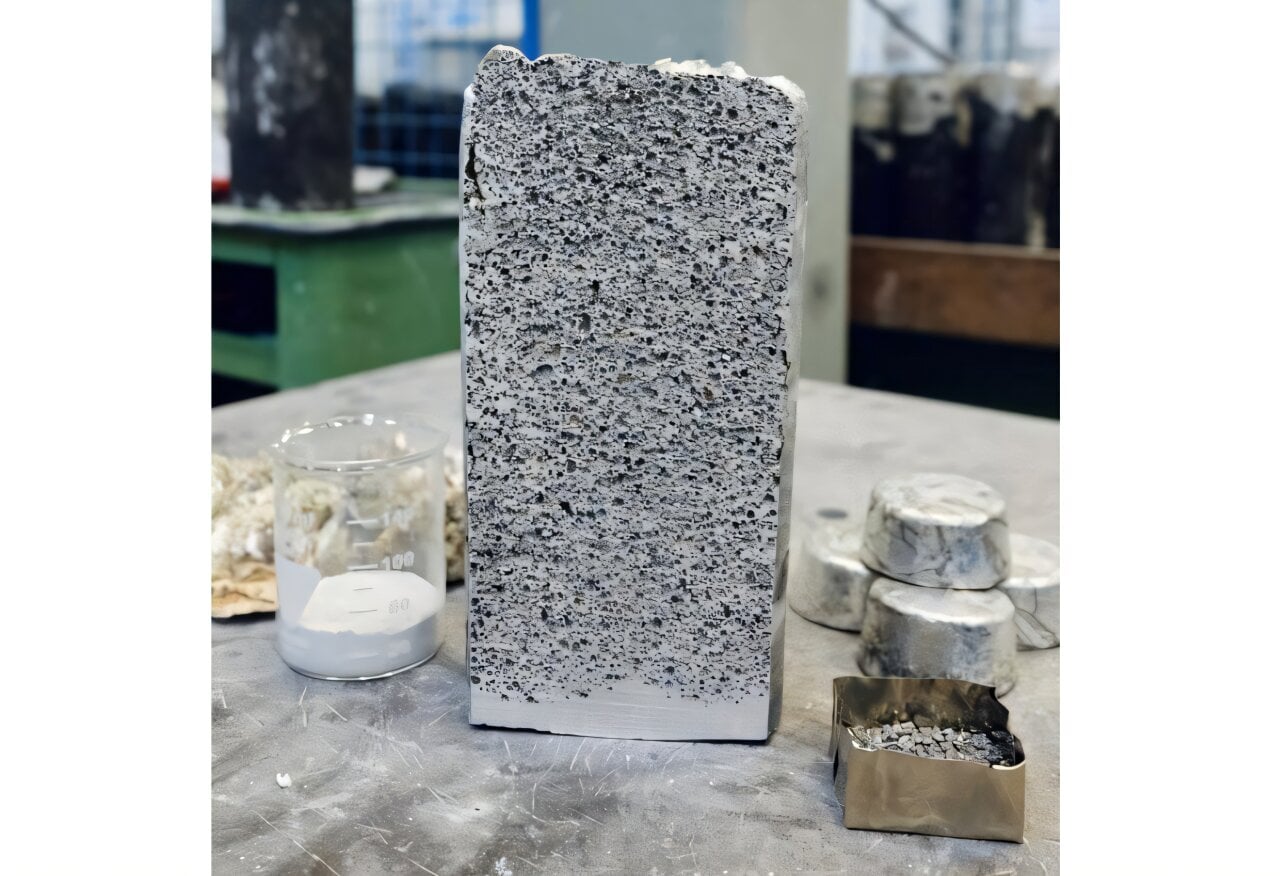
To create the foam, the team mixed oyster shell powder into a magnesium-calcium alloy via a melting furnace. Because the shells are primarily composed of calcium carbonate (limestone), the powder reacts at high temperatures to create carbon dioxide (CO2). The gas reportedly creates bubbles that reside in the viscous melt, thus forming the foam.
Following the cooling and hardening steps, a metal foam with a homogeneous pore structure formed. The team explained that the CO2 produced was trapped in the pores. Setting this new material apart from others is that it is sustainably produced, fully recyclable, ultra-lightweight and appropriate for a variety of applications.
Because all the raw materials used in the making of the foam can be sourced from the ocean — the shell powder comes from oysters harvested from the ocean, while magnesium and calcium are byproducts of seawater desalination — the material could be returned to the ocean, dissolving as soon as it is put in water.
Thanks to its porous structure, the magnesium foam possesses unique properties. Specifically, the material is highly formable and can absorb a significant amount of energy, thus making it appropriate for lightweight components designed to dampen vibrations or impacts — for example, crumple zone parts in vehicles.
Additionally, the team believes the material could potentially find use cases in shipbuilding, aviation or protective clothing such as safety vests or protectors.
The article detailing the material, “Green and ultra-light magnesium foam processed using oyster shell powder as blowing agent,” appears in the journal Discover Materials.