Next-gen 3D-printed bone implants mimic nature’s design
Marie Donlon | June 05, 2026A team of researchers from Tampere University in Finland suggests that personalized bone regeneration and accessible treatments for bone defects could one day be possible using a 3D-printed ceramic implant material they developed.
Using hydroxyapatite, which is the same compound that creates the mineral structure of natural bone, the team built bone-like scaffolds that support the body’s own capacity for tissue regeneration.
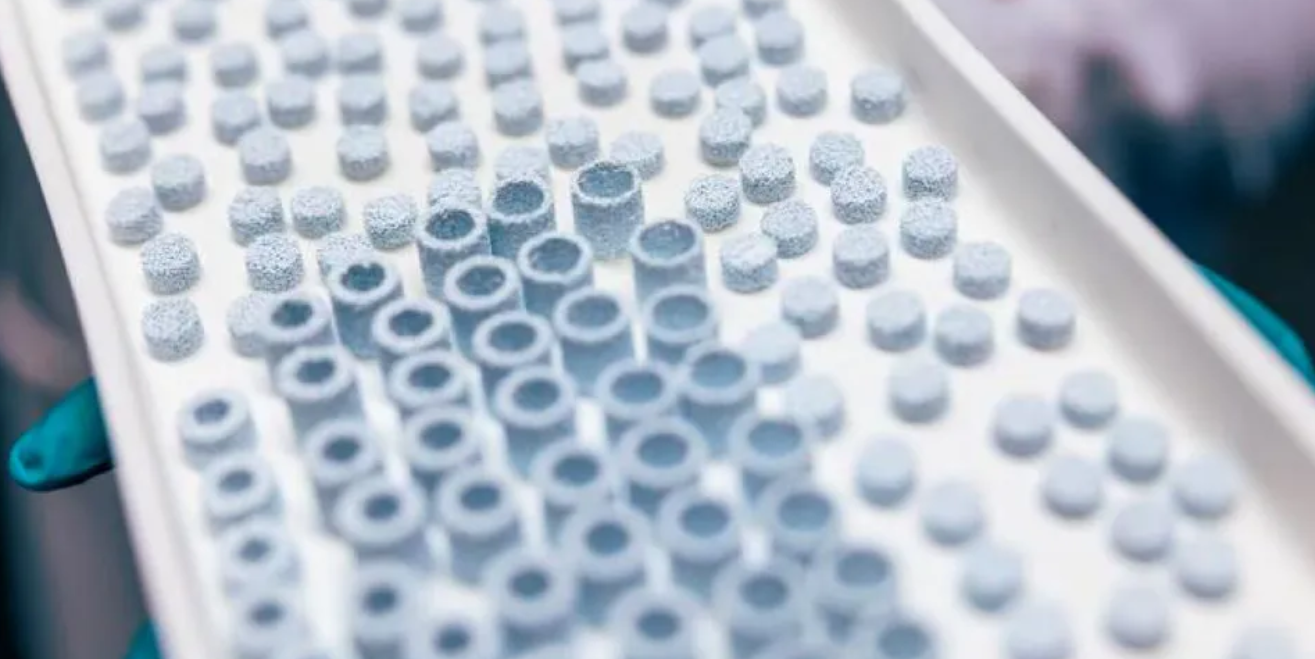 Source: Jonne Renvall, Tampere University
“By using the same material that nature uses and shaping it through ceramic 3D printing, the implants can be precisely tailored to match a patient’s individual bone defect, without relying on drugs or growth factors that may cause side effects,” the team explained.
In the lab, the team used ceramic 3D printing to precisely control the internal architecture of the scaffolds, including the size and connectivity of pores that enable cells to grow and nutrients to flow through the material. Once printed, the researchers discovered an optimal bone-like structure that features implants with engineered internal pores that measure around 400 micrometers and roughly 45% porosity.
“This architecture achieved a crucial balance between strength and biological performance, allowing bone‑forming cells to enter the material, interact with one another, and successfully begin forming new bone tissue,” the team added.
At this time, the team also found that subtle changes in material chemistry and surface properties influenced cell behavior.
“We found that the high temperatures required during processing can alter the surface of the material in ways that make it more difficult for human cells to attach,” the team explained. “Our finding highlights that not only the composition, but also the surface properties of biomaterials are critical for successful bone regeneration.”
Further, the team also suggested that the technology allows implants to be designed for individual needs rather than traditional 'one size fits all' solutions.
The research is all being conducted under an ongoing project dubbed GlassBoneS.