Smarter tech unlocks more nutrition from staple crops
Jody Dascalu | June 30, 2026The transition from traditional processing to nutrient-focused engineering is reshaping how staple crops are prepared for global consumption. Cereals, legumes and soybeans form the dietary base for much of the global population, yet conventional refining often removes bioactive compounds concentrated in the outer layers of the seed. New engineering methods focus on preserving these nutrients by targeting specific anatomical structures during processing.
This shift involves techniques such as precision debranning and controlled thermal treatments that reduce damage to heat-sensitive vitamins and proteins. By better aligning processing conditions with the physical properties of the raw material, modern systems can maintain high throughput while improving the nutritional quality of the final product.
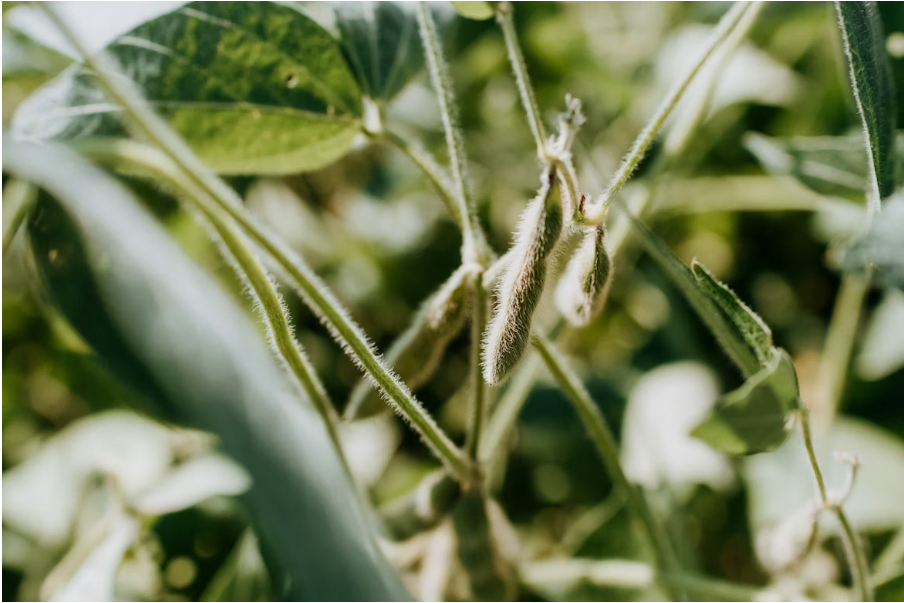 A close-up of green soybean pods growing on a stalk. Source: Kelly Sikkema/Unsplash
Transition from raw materials to high-value nutrient extraction
The move from bulk processing to precision extraction focuses on recovering bioactive compounds before they are degraded by intensive mechanical refining. This shift is reflected in how processing steps are sequenced to isolate nutrient-dense fractions earlier in the workflow. Precision debranning illustrates this approach. The outer layers of cereals, rich in phenolic compounds and vitamins, are removed in controlled stages, enabling recovery for fortification instead of diversion to animal feed. Real-time sensors that measure bran thickness and color allow equipment to adjust abrasive pressure, helping preserve or selectively separate the germ and aleurone layers with minimal damage.
A similar approach is used in soybean and legume processing, where enzyme-assisted methods improve both yield and protein quality. Conventional extraction relies on high heat or solvents that can denature proteins and reduce functionality. Targeted enzymes introduced during steeping or milling break down the cellular matrix more selectively, increasing the release of proteins and peptides while maintaining their structure. This improves bioavailability and functionality in downstream formulations without the losses associated with more intensive processing.
Control over processing conditions also supports micronutrient preservation during extraction. Vacuum-assisted systems address limitations of open-air steeping and boiling, where oxidation and leaching reduce nutrient content. Operating under reduced pressure lowers the boiling point and limits oxygen exposure, enabling extraction at lower temperatures. This helps retain mineral content and reduces off-flavors associated with extended heat exposure, supporting the production of nutrient-stable, higher-value ingredients.
Impact of mechanical and thermal refining on food quality
Mechanical and thermal refining steps directly influence how nutrients are structured, absorbed and retained in staple foods. Particle size reduction plays a central role in digestibility and glycemic response. High-intensity milling increases surface area for enzymatic activity, accelerating starch hydrolysis. While this improves texture and reduces cooking time, excessive milling can damage starch structure, making control over milling intensity necessary to balance structural integrity with nutrient availability.
Thermal processing introduces similar trade-offs, particularly in extrusion-based systems. Extrusion combines elevated pressure and temperature to form products, but these conditions can denature proteins or promote poorly digestible complexes. Modern systems address this through optimized screw designs and cooling zones that reduce thermal residence time. Controlling specific mechanical energy input allows sufficient starch gelatinization while preserving amino acid quality, aligning structural modification with nutritional outcomes.
In oilseed processing, the trade-off between processing intensity and nutrient retention is reflected in the choice between cold-pressing and solvent extraction. Solvent-based methods typically operate at higher temperatures, increasing the risk of oxidizing unsaturated fatty acids and reducing antioxidants such as tocopherols. Cold-pressing operates under milder conditions, improving chemical stability and preserving bioactive compounds. Although yield is lower, the resulting oils retain higher nutritional value, reinforcing the balance between efficiency and nutrient quality.
Systems for monitoring and controlling nutritional integrity
The use of real-time sensors extends the same process control strategies used in precision extraction and refining to maintain nutritional integrity during downstream operations. Parameters such as moisture and temperature are continuously monitored during fermentation and drying to ensure that conditions remain aligned with the requirements of heat-sensitive vitamins and proteins identified earlier in the processing chain. Automated steam injection systems help maintain temperatures within a defined operating range, reducing the risk of localized overheating that can degrade micronutrients. When integrated into centralized control architectures, these systems enable consistent process conditions, allowing each batch to meet defined nutritional targets without reducing throughput.
Data-driven feedback loops further support this approach by linking compositional measurements to process adjustments in real time. Systems that monitor chemical composition at multiple stages can adjust variables such as flow rate, residence time or thermal input to maintain target levels of antioxidants and other bioactive compounds. This builds on earlier steps such as selective debranning and controlled extraction, ensuring that recovered nutrients are preserved through subsequent processing. By reducing variability introduced by fluctuations in raw material quality, these control systems limit reliance on manual intervention and improve consistency in meeting nutritional labeling requirements.
Nutrient recovery and secondary stream utilization
Side-streams like cereal bran, soy husks and legume pods are often underutilized, yet they harbor high concentrations of dietary fiber and phenolic compounds. Instead of diverting these to low-value applications, modern systems reintegrate them as functional ingredients. For example, air classification systems can fractionate wheat bran into concentrated antioxidant streams that are then reintroduced into flour. This recovery maximizes the total nutrient yield of the raw material and creates a direct internal source for product fortification.
Techniques like fine grinding enable the selective isolation of these fractions based on particle density. Once standardized, these nutrient-dense components are incorporated into downstream formulations. Similarly, closed-loop water systems capture dissolved vitamins and minerals from steeping streams that would otherwise be lost. By concentrating and recycling these soluble solids, processors transform potential waste into high-value inputs, which improves both process efficiency and the final nutritional profile.
Future trajectories for fortified staple food production
The future of staple food production relies on the shift toward non-thermal methods and modular processing units that minimize nutrient degradation. By scaling the recovery of functional ingredients from secondary streams like bran and husks, processors can maximize the nutritional yield of every crop harvest. When these adaptive extraction techniques are paired with the digital monitoring loops discussed, the result is a highly responsive production model. These advancements allow for the precise integration of biofortified materials into regional food supplies, ensuring that nutritional integrity is maintained from the initial debranning stage through to the final product.