UK researchers convert wool into sustainable biomaterial that regenerates bone in live animals
Marie Donlon | May 06, 2026A team of researchers from King’s College London is turning wool into sustainable material for bone repair.
The researchers tested the wool-based keratin in animal models and determined the material was capable of guiding new bone growth across damaged areas.
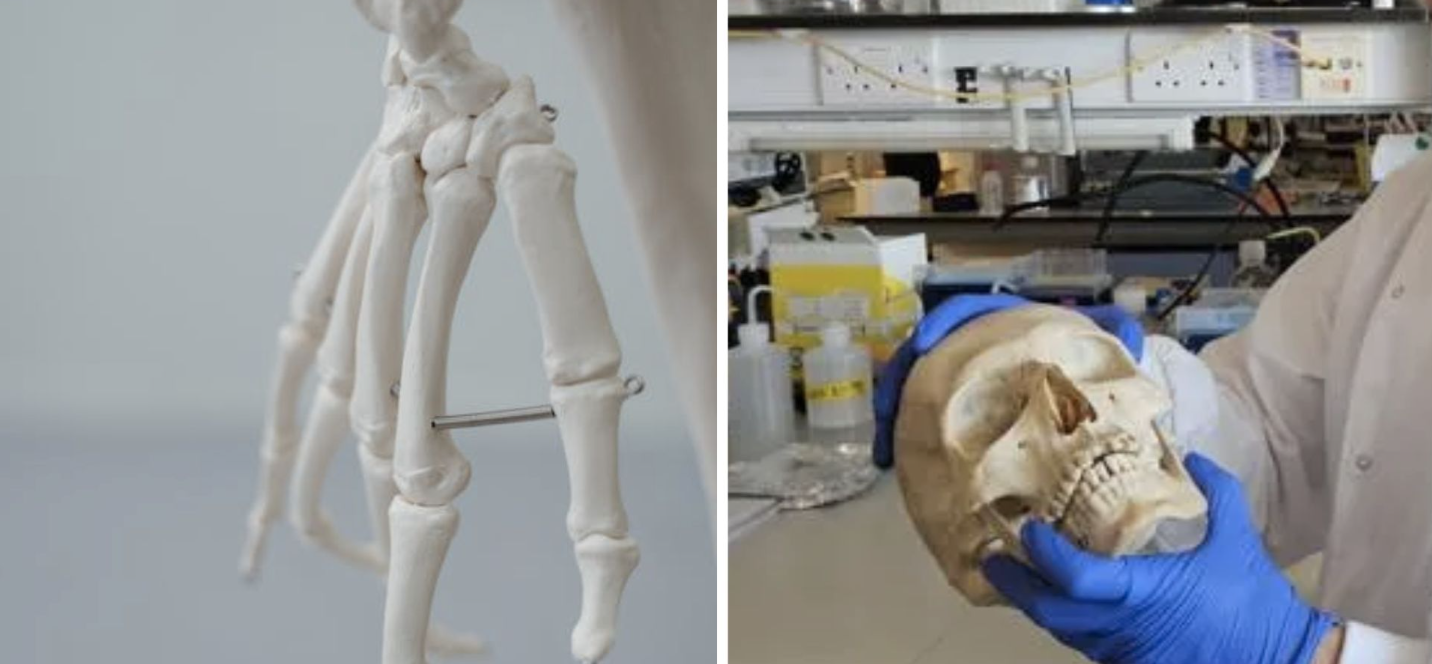 Source: King's College London
The team explained that keratin, which is a natural structural protein derived from wool, proved to support bone regeneration in a living animal, producing bone tissue with a greater resemblance to natural, healthy bone than the current gold standard scaffold collagen.
While collagen has been used in many regenerative medical and dental applications, functioning as protective barriers and preventing soft tissue from interfering with healing while enabling bone to grow back, it also has limitations.
Specifically, as a scaffold, it is relatively weak and degrades too rapidly, which is problematic when repairing bones that support weight or resist force. Likewise, It can also be difficult and expensive to extract, according to the researchers.
“From a research perspective this is a major milestone. It positions keratin as a potential new class of regenerative biomaterial that could challenge the long-standing reliance on collagen,” the team noted.
In the lab, the team created membranes using keratin extracted from wool and then chemically treated them to develop stable, durable scaffolds.
The membranes were also tested on human bones cells in the lab, where the cells thrived and demonstrated obvious signs of healthy bone formation.
Researchers also revealed that although collagen membranes produced more bone overall, the keratin scaffolds created bone that was more organized and structurally secure, with better-aligned fibers that closely resembled natural, healthy bone.
The membranes also reportedly integrated well with surrounding tissue and stayed stable during the healing process — both of which are essential qualities for real-world medical applications.
Further, because wool is a naturally derived material and is oftentimes a waste product from the farming industry, it is both a renewable and scalable resource.