“Click-clotting” halts bleeding in seconds and could reshape emergency care
Marie Donlon | May 20, 2026A rapid approach for engineering blood clots that halt severe bleeding and support tissue healing has been developed by a team of researchers at McGill University.
The new approach, dubbed "click clotting," unites red blood cell surface proteins via a chemical reaction, thus producing a biocompatible clot that is reportedly 13 times more fracture resistant and four times more adhesive than natural blood clots.
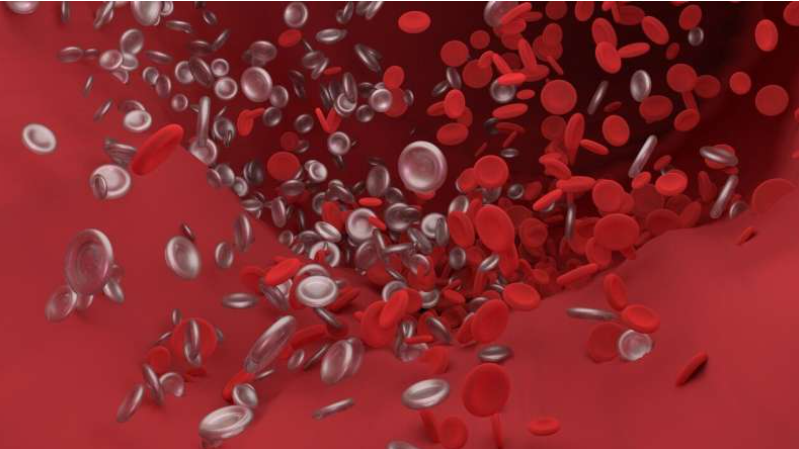
The new approach promises to pave the way for the development of life-saving biomaterials that help to control severe bleeding, as well as assist people with clotting disorders.
"Natural blood clots can be slow to form and mechanically fragile, which limits their ability to stop severe bleeding and can compromise healing," the team explained. "Our work shows that, when engineered appropriately, red blood cells can play a central structural role, enabling the design of stronger and more functional biomaterials."
Earlier attempts for cross-linking red blood cells relied on chitosan, which is a polymer derived from crustacean shells. However, the team explained that chitosan led to brittle clots, ruptured cells and inconsistent clotting.
Conversely, in "click clotting," the clot structure is fortified through a rapid, bio-safe chemical reaction that joins proteins on the red blood cell surface, thereby creating a solid gel in just five seconds.
The team noted that because the "click" reaction doesn't disturb normal blood chemistry, it can occur simultaneously with the body's natural clotting process. As such, the artificial cell‑based gel, dubbed "cytogel," can be added to whole blood, becoming embedded within the body's own fibrin clot.
"The technology enables both autologous clots (using the patient's own blood) and allogeneic clots (using type-matched donor blood). Autologous clots can be prepared in approximately 20 minutes, while allogeneic clots can be prepared within about 10 minutes. Given typical clinical time constraints, this approach has strong potential for in-patient emergency care, wound management and related settings," the researchers added.
In the lab, the results were validated via in vitro testing and through testing on rodents wherein effective healing and regeneration were observed in an injured liver.
An article detailing the work, “Engineering tough blood clots for rapid hemostasis and enhanced regeneration,” appears in the journal Nature.