Send in the Crowds: Engineering’s New Money Source
By Larry Maloney | April 14, 2016One longstanding axiom in the engineering world is fast going the way of the buggy whip: the notion that “if a technology wasn’t invented by one of our engineers, we don’t want it.”
Companies first chiseled away at their aversion to “not invented here” technology by hiring outside engineering consultants or labs with special expertise. Then they began forging “technical alliances” with partner companies. Increasingly, even OEMs like Boeing, GM and Siemens routinely outsource the design of vital engineering systems to suppliers.
In the last few years, however, companies have been taking a further step in their quest for a technical edge by asking the whole world for help. Whether that involves seed money for R&D or fresh ideas to improve a design, more companies and engineer-entrepreneurs are looking for assistance from “the crowd.” In less than a decade, Web sites touting “crowdfunding” and “crowdsourcing,” such as Kickstarter, Indiegogo, Experiment, GrabCAD and many more, have sprung up to serve as valuable new incubators for technology.
(Read "Increasingly, Drivers Are Steering Automotive Design.")
In this two-part series, Engineering360 looks at the crowd, first as a source for capital and then as a source for ideas and inspiration.
Crowdfunding: Computers to Space Sails
“We strive to be the platform for innovative ideas,” says Julio Terra, director of Technology and Design Outreach for Kickstarter, a crowdfunding platform that since 2009 has raised $2 billion and backed more than 102,000 projects in fields ranging from the arts and fashion to design and technology. “We want to build the community that will become the first customers and the first advocates for your new product.”
 “We strive to be the platform for innovative ideas,” says Julio Terra, director of Technology and Design Outreach for Kickstarter.Among Kickstarter’s successful projects, nearly 4,200 have come from the technology category, one of 15 categories supported by the site. Backers have pledged nearly $430 million to these technical projects, which run the gamut from computer boards to virtual reality systems. Terra says that many projects in Kickstarter’s Design category also involve engineered products.
Among recent Kickstarter technology projects are a $9 computer from California-based Next Thing Co., which raised more than $2 million from over 39,000 backers, obliterating the company’s original goal of $50,000. A UK-designed DNA lab called the Bento took in more than $160,000 from 458 backers in the first two weeks of its Kickstarter campaign in late March 2016, surpassing its goal of $58,804.
Typically, Kickstarter campaigns last 30 days, and project creators receive pledged money only if the initial funding goal is reached. If a project is successfully funded, Kickstarter applies a 5% fee to the funds collected as a way to support the platform, plus payment processing fees of 3-5%.
In the technology sector, where about 700 funding campaigns are now underway, around 20% of projects are successful, says Kickstarter’s Terra. The secret to success? “First, it’s got to be a very good idea in its own right,” says Terra. “Then the project creator needs to use our platform to tell his or her story, such as giving updates on product development, showing prototypes, videos and the like. You’ve got to keep your backers excited and engaged.”
Kickstarter’s rules on potential technology projects are relatively straightforward. Projects can’t mislead people or misrepresent facts, and creators must be candid about what they plan to accomplish. When a project involves manufacturing and distributing a complicated item such as an engineered product, the platform requires projects to show backers a prototype of what they are making. Photorealistic renderings are not allowed. And while they often seek input from backers, project creators retain full control of intellectual property.
As for the backers themselves, they typically receive rewards, in most cases the product itself. Pledges usually run from $80 to $150, but can run into thousands of dollars for more complex products. Thanks to 2012 federal legislation, some crowdfunding sites, such as AngelList and WeFunder.com, allow backers to gain an equity share in the projects they support. Thus far, Kickstarter allows tangible rewards only. Says Terra: “Backers have no qualms about suggesting improvements and features in products they are asked to support, and sometimes they even get hired by project creators.”
Early in 2016, Kickstarter took a look at what it considered to be some of its most innovative technology projects. They included:
· The Oculus Rift virtual reality headset (9,522 backers pledged $2.4 million).
· The Planetary Society’s LightSail, a new space exploration craft expected to launch in 2016 (23,331 backers pledged $1.24 million).
· OpenRov, an undersea robot with open-source technology that can be shared with the community (484 backers pledged $111,622).
· Voltera V-One, a desktop “factory” for producing prototype circuit boards (938 backers pledged $502,310).
The crowdfunding campaign for the Voltera V-One exceeded its goal of $70,000 on day one. “It surpassed everyone’s expectations,” says Alroy Almeida, a co-founder of the Ontario-based Voltera, Inc. Still, he says that technology companies considering crowdfunding campaigns need to choose their platforms carefully, taking into consideration whether the platform routinely gets the kind of audience needed. “In our case, we saw that Kickstarter had a large community interested in electronics and 3D printing,” says Almeida.
In addition, Almeida says that the crowdfunding platform you choose needs to attract a community that understands how crowdfunding works. In the case of a technical product with sizeable manufacturing costs, he says it can take several months before a backer receives the product he or she helped to fund, in Voltera’s case a device that retails for $2,500.
“We spent a lot of time giving our backers regular updates on product development, as well as presenting videos and tutorials on manufacturing topics.” But it wasn’t a one-way street. Backers gave Voltera plenty of feedback, such as suggested features that could be built into future versions of the product.
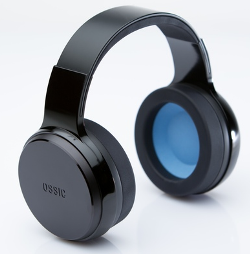 California-based Ossic Corp. attracted pledges of more than $1.5 million for its 3D immersive audio headphones. California-based Ossic Corp. also enjoyed an enthusiastic response to its Kickstarter efforts. In two weeks on the site, the company attracted pledges of more than $1.5 million for its 3D immersive audio headphones, which are expected to sell for about $400. CEO Jason Riggs, a mechanical engineer specializing in acoustics, says that crowdfunding is becoming more of a requirement for new hardware products as a way of “demonstrating traction” in the marketplace.
Before beginning the Kickstarter campaign, Riggs and his colleagues had already promoted the upcoming campaign to thousands of people at events and through social media. “To be successful in crowd funding,” says Riggs, “you not only have to build the rocket, but you also have to provide the rocket fuel. The crowdfunding platform amplifies the promotional work you’ve already done.”
While many project creators on Kickstarter are companies, others are independent design engineers who depend on Kickstarter backing for their livelihoods. One example is Patrick Mitchell, a Canadian electronics designer who has tapped Kickstarter funding for 16 different projects, mostly involving low-cost computer boards and electronics kits. His latest project: an audio shield that lets users to create word commands on Arduino circuits. The product drew more than $3,000 in pledges, well over the $522 goal.
R&D Boost
Another increasingly popular crowdfunding Web site for technology – Experiment – started in part from a bioengineer’s frustration with raising $5,000 she needed to advance her work on an enzyme to treat anthrax. As Cindy Wu recalls it, she asked a professor where she could go to raise the money, and his reply was: “You can’t get it because you’re only 22, don’t have a Ph.D, and aren’t asking for more than $25,000.”
 Experiment co-founder Cindy Wu helps to fund technology ideas.Not long after, she teamed up with biochemist Denny Luan to build a Web site expressly tailored to giving scientists and engineers the seed money they need to get their projects off the ground. Patterned after Kickstarter, Experiment has garnered more than $6 million in pledges since its launch in 2012, with about 440 projects funded.
The Experiment team reviews each proposed experiment, and an outside expert, such as a university professor, must endorse it. While many projects have funding goals of less than $5,000, a campaign by the Gray Foundation for research on Batten’s, a childhood neurological disease, took in more than $2.6 million.
“Projects must have specific, well-defined research goals,” says Wu. “Then it is up to the people who make up the Experiment community to determine whether a project is worthy of their support.”
The average donation is $178, and Experiment emphasizes encouraging project leaders to solicit feedback from backers, as well as openly share progress and results. Virtually every project includes a video, in which project leaders explain the objectives of the experiment and its significance.
Among Experiment’s engineering-oriented projects, Colorado-based Intelligent Concrete raised $5,500 to identify the right material mix for constructing disaster relief housing from recycled concrete, broken glass and other scrap.
“The real value of sites such as Experiment and Kickstarter is that you get the voice of the people weighing in on your project,” says civil engineer Jon Belkowitz, co-founder of Intelligent Concrete.
 Successful crowdfunding calls for extensive use of social media, says Laura Andrews of Azurite Technologies. In the San Francisco area, Laura Andrews, co-founder of Azurite Technologies, leveraged Experiment to raise nearly $8,000 for her work on a noninvasive blood glucose sensor that could be integrated into existing monitors or as part of an artificial pancreas
“Experiment is a great platform,” says Andrews, who holds a master’s degree in biotechnology, “but you must be prepared to use social media extensively to promote your project.” Andrews says that a successful crowdfunding campaign can serve as an important milestone to gain further funding from venture capitalists and other sources.
In Rochester, New York, Anne DeWitte learned a lot about user interfaces in her 20 years of engineering work at Kodak on printers and copiers. Now her own company, Tangible Surface Research, is using money from an Experiment campaign to explore tactile symbols and surfaces that could help visually impaired people operate appliances and other devices. Among other things, the money supported work with the blind and with Rochester Institute of Technology design students in exploring tactile overlays that could be placed over conventional controls.
DeWitte says the project provided valuable feedback on possible new directions and applications for her work, such as the need for tactile overlays on gym equipment. To further her work, DeWitte may turn to Kickstarter as her research moves more into the product development stage.
Experiment co-founder Wu says that currently about 90% of the platform’s users come from the academic world, while 10% are independent scientists and engineers. She predicts that this split will increasingly shift to more participation by individuals outside academia, as well as engineering-oriented companies. Says Wu: “Forward-thinking companies are becoming more open to ideas from the outside.”
Coming in Part 2, “More often than not, the crowd can find the right solution.”