Advancing precision metrology: New frontiers in confocal chromatic sensing
March 19, 2026In the realm of non-contact distance and thickness measurement, confocal chromatic sensing is highly regarded for its submicron precision and remarkable versatility. The measuring principle relies on the controlled chromatic aberration of a lens system, which splits white light into a spectrum of monochromatic wavelengths. Unlike laser triangulation, which requires an offset between the light transmission and reception locations, the confocal method transmits and receives light along the exact same axis. This coaxial design prevents shadowing and allows for flawless measurements inside deep recesses, narrow boreholes or on highly reflective and transparent materials.
Long established as a reliable, rugged tool on the factory floor for inline quality assurance, confocal technology must continually adapt to the evolving complexities of modern manufacturing. Micro-Epsilon’s latest portfolio expansion addresses these precise industrial demands by introducing new architectures designed for severely limited installation spaces, complex multi-layer materials and extreme environmental conditions.
The next generation of control: Compact and connected
In traditional confocal setups, a passive sensor head is linked to a separate electronic controller unit. The controller is the brains of the operation, decoding the reflected wavelengths into precise dimensional data. With the introduction of the new IFC241x generation, the focus has shifted toward miniaturization and high-speed industrial connectivity.
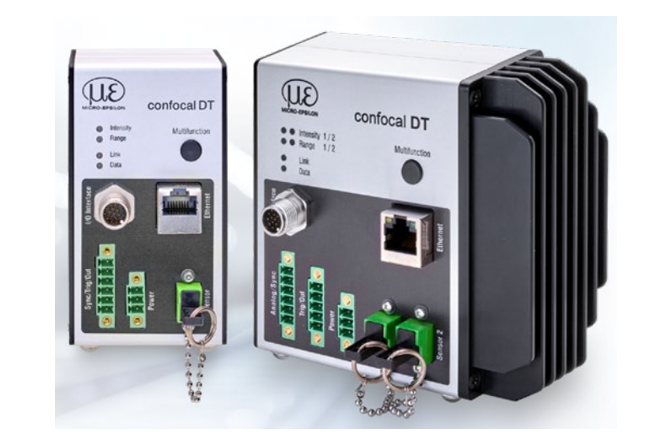 Figure 1. Micro-Epsilon's IFC2411 and IFC2412 controllers are the most compact confocal chromatic controllers currently available. Source: Micro-Epsilon
The base models, the IFC2411 and IFC2412 (dual-channel), represent a significant mechanical milestone as the most compact confocal controllers currently on the market. With either free-standing or DIN rail mounting, they allow for seamless integration into the tightest control cabinets without sacrificing nanometer resolution.
For highly dynamic applications, the IFC2416 and IFC2417 models elevate the maximum measuring rate to 25 kHz. Beyond raw speed, these advanced controllers introduce highly sophisticated multi-peak evaluation capabilities. They are capable of simultaneously measuring the thickness of up to five distinct layers of transparent materials — a critical feature for inspecting laminated glass, medical tubing or complex packaging films.
Furthermore, the entire IFC241x series embraces modern industrial Ethernet. With native support for EtherCAT, PROFINET and EtherNet/IP, these controllers allow for direct PLC connection. Coupled with an intuitive, built-in web interface, engineers can configure the devices entirely without proprietary, external setup software.
The all-in-one strategy: Integrated precision
While separate controllers offer modularity, moving machine parts present a unique challenge. Routing fragile fiber optic cables across automated gantries or multi-axis tooling machines can lead to mechanical wear, cable fatigue and potential signal degradation. The new IFD2410 and IFD2415 series directly solves this by collapsing the traditional architecture into an "all-in-one" solution.
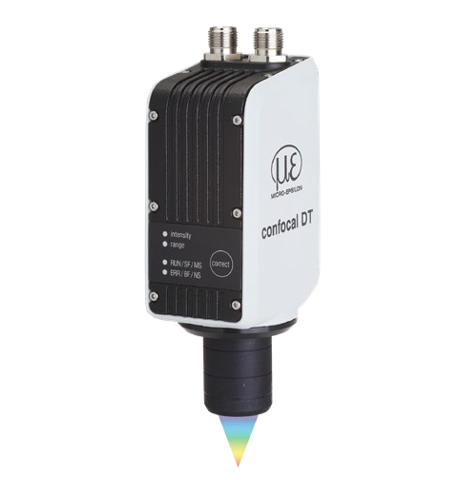 Figure 2. With an integrated controller, the IFD2410 sensor enables fast integration into plant equipment and machines as no optical fiber is required. Source: Micro-Epsilon
By integrating the controller directly into the sensor head, the IFD series completely eliminates the need for fiber optic cables. The entire processing unit is housed within a single, space-saving, IP65-rated aluminum enclosure. This rugged design simplifies cable management on dynamic machinery, allowing for direct connection to industrial networks from the sensor itself.
Despite the compact footprint, the integrated series delivers uncompromised performance. The IFD2410 provides submicron resolution down to 12 nm at measuring rates up to 8 kHz. The higher-tier IFD2415 pushes this boundary further, achieving less than 8 nm resolution at 25 kHz and bringing the five-layer multi-peak thickness measurement capability to the all-in-one form factor. Crucially, these sensors feature active exposure regulation of the CCD line, enabling the system to instantly adapt to varying surface reflectivities during high-speed, dynamic measurement processes.
Pushing environmental boundaries: High-temperature and vacuum resilience
Certain high-tech sectors, such as semiconductor wafer manufacturing or aerospace testing, require precise dimensional metrology in environments that would destroy standard optical equipment. To meet these severe requirements, Micro-Epsilon has introduced the IFS2407-xHT/VAC series.
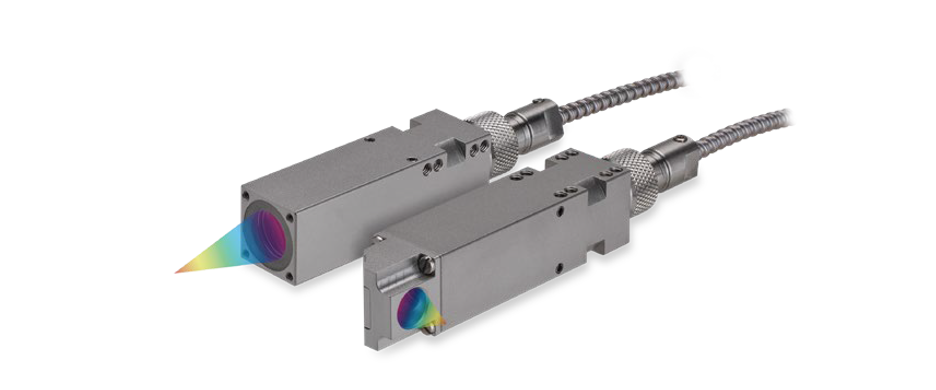 Figure 3. The IFS2407-xHT/VAC confocal chromatic sensors are vacuum-compatible and thermally stable up to 200° C (392° F). Source: Micro-Epsilon
These are the first optical sensors in the confocal portfolio designed to withstand ambient temperatures up to 200° C (392° F) continuously, maintaining maximum measurement accuracy in challenging environments. Beyond thermal resilience, the series is engineered for ultra-high vacuum (UHV) and clean-room compatibility.
To prevent the release of volatile compounds that could contaminate a vacuum chamber, the IFS2407-xHT/VAC sensors feature a strictly adhesive-free, glue-free construction. Encased in robust stainless steel (1.4404/316L) with specially mounted glass lenses, the sensors eliminate the risk of outgassing. Because these extreme environments often feature highly restricted installation spaces, the series includes models with a 90° beam path. This geometric versatility ensures that extraordinary precision — with resolutions down to less than 6 nm and linearity as low as less than ±0.18 µm — can be achieved even when direct, overhead optical access is physically impossible.
Micro-Epsilon
As manufacturing tolerances tighten and production environments grow more severe, optical metrology must deliver lab-grade accuracy directly on the shop floor. Micro-Epsilon’s latest updates to its confocal chromatic portfolio achieve exactly this. By miniaturizing the processing hardware with the IFC241x series, streamlining dynamic installations with the all-in-one IFD241x sensors, and engineering the IFS2407-xHT/VAC for extreme thermal and vacuum resilience, these systems ensure that submicron, non-contact measurement can be successfully deployed in the industry's most demanding applications.