Lock it or lose it: Manufacturing tech to soften the shakes
Ryan Clancy | March 05, 2026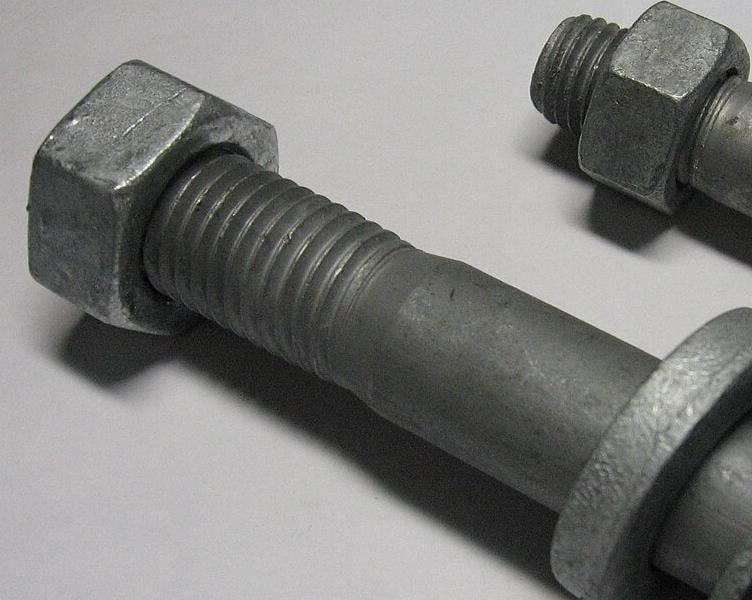
Capable fastener locking mechanisms have existed for decades. There’s the lock nut, with its simple nylon insert acting as an interference fit.
Tried and tested, lock nuts have found their way into generators, air conditioning systems, and pretty much any equipment that vibrates. A look at the Nyloc fastener inventory shows off examples of nylon locked bolts.
Further down the line, developments happen fast in engineering applications. The latest insert nuts have placed nylon on the back-burner, calling in high-temp polymers capable of holding their form even when positioned next to vibration-intensive air handling units that shift large volumes of air. High-cycling robotics gear also benefits from the bolts. Unlike older inserts that could become brittle, these modern inserts retain their elastic memory through thousands of vibration cycles.
As ever, this is just one answer to a tough vibrational puzzle. While polymer inserts excel in temperature-controlled environments, the heavy-duty infrastructure supporting today’s manufacturing facilities requires something more versatile than a one-size-fits all nylon insert.
The mechanical and chemical diversification of bolt locking
While still a popular thread-freezing solution today, lock nuts are no longer the de facto choice when working with fasteners on high-vibration systems. For one thing, heat and chemicals add a layer of unpredictability to already soft polymer thread inserts. The plastics can even become brittle or deform as outside influences join stress loading factors.
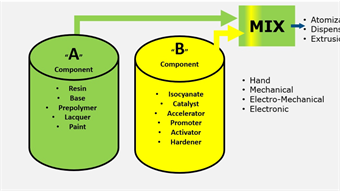
A more up-to-date locking technology would be a liquid adhesive or cement. These compounds exist but come with their own set of logistical hurdles. While anaerobic threadlockers provide an exceptional chemical bond that fills the microscopic gaps between threads, they require precise application. In a high-speed assembly environment, like a high-volume production center, it’s easy to balk at the idea. Liquid dispensing can be messy, prone to clogging, and difficult to verify without advanced vision systems. It’s also not exactly reusable, so maintenance fixes via some form of disassembly are a no-go.
A more streamlined alternative involves shifting the "locking" from the thread to the fastener head itself. Wedge-locking washers represent a departure from friction-based locking, opting instead for a geometry-based solution that uses tension to secure the bolt. Unlike a polymer insert that tries to "grip" the bolt, these dual-washers feature interlocking cams that effectively "deadbolt" the fastener in place. As pairs of specially engineered washers tighten against one another, clamping lock is applied by means of engineered cams on opposing sides of the matching washers. The flip side of the washers have serrations, designed to provide instant grip as the bolt tightens. With no plastics and no adhesives, the elegant locking mechanism relies on tension, which won’t loosen when conditions change suddenly.
To explain that last statement, the constant low-frequency buzz associated with an air handling unit or some other predictable noise-propagating machine is easily managed by traditional bolt locking. What’s not so easily handled is rapid transverse movements and sudden accelerations. In the high-cycling environment of a modern robotics plant, or within the high-G stress points of automated sorting systems, these rapid "shocks" cause the polymers to momentarily compress, then the inserts lose their grip. Tension-based wedge locking solves such transient loading issues very nicely indeed.
Smart bolts and future mechanical locking systems
New classes of evolved “Active Fasteners” represent a huge leap in material science. Instead of torque applied by a handheld or factory-stationed spindle, preload torque is applied, then a set temperature is directed at the material, causing the bolt shank to shrink transversely. That’s an amazing feature, one that works at the molecular level. These newly developed SMAs (Shaped Memory Alloys) remember their preset shank length, contracting to pull the bolt into an unbreakable high-tension lock.
Is it enough to use such high-end locking systems and rely on them to create a uniform chain of linkages throughout a massive factory infrastructure? Unlikely, a single loose bolt could presage a thermal cascade, burning out the joint, creating hot spots. No, the preferred locking strategy is to partner bolts with a smart monitoring node. A tiny inbuilt strain gauge within the bolt head then turns the static piece of hardware into a live data point. These "Smart Bolts" communicate via low-power wireless protocols, providing a real-time window into locking health without a technician ever having to touch a wrench.
Ironically, even these monitoring technologies are in danger of becoming obsolete. Piezoelectric chips pick up bolt stresses and clamping forces without the need for a battery, delivering their data to nearby readers for transmission to a handheld scanner for the maintenance team to log.
BoltSafe offers such a handheld scanner, and there’s also the Dakota BT1-DL, differentiated by its use of ultrasonics. The Dakota scanner is quite different, in that it measures bolt elongation and deformation when calculating clamping stresses.
The future of bolt loosening management
Engineers are witnessing a shift from passive hardware to active locking technology. It’s not inconceivable to imagine a future where the locking data becomes part of a feedback loop, the temperature then raised to contract the Active Fastener bolts slightly and maintain the lock when high-vibration systems suddenly throw in a change in lateral movement. The partnership of piezoelectrics and active fasteners could make this type of feedback locking a reality.
In the meantime, vibration-prone industries are moving from "dumb" hardware toward the Digital Joint. This is where high-volume production lines meet 24/7 infrastructure health monitoring. The lock nut and wedge-locking mechanisms of today still have their place, of course. Then there are manually applied sealing compounds and cleverly formulated thread coatings as well. Sometimes, the simplest solutions are still the best. Then, if dumb locking systems are installed, ultrasonic measurement is always on hand to check for issues.
Rocketing into the future, though, it might be a good idea to keep an educated eye on the likes of the so-called digital joints of tomorrow. Offering inherent locking traceability, new bolt locking classes have a DNA that moves beyond friction and torque, pulling in washer tension and other looseness defeating locking forces, too.