Early-alert patch flags allergic responses before symptoms hit
Marie Donlon | March 26, 2026A team of researchers from KAUST has developed a wearable device that alerts wearers with food allergies before a reaction begins, thus reducing life-threatening anaphylaxis.
According to its developers, the AllergE patch is a microneedle-based biosensor that painlessly detects immunoglobulin E (IgE) — which is the antibody that triggers allergic reactions — from the fluid beneath the skin.
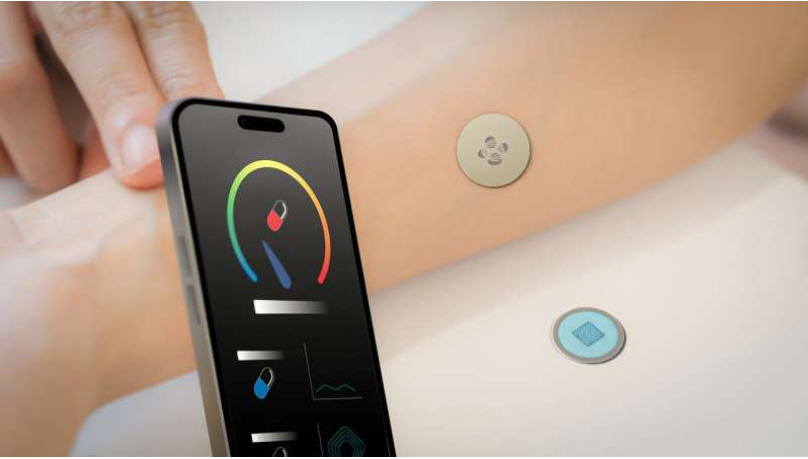 Source: KAUST
Unlike conventional food allergy tests, such as skin pricks and blood draws, which are invasive, time-consuming and that run the risk of triggering mild reactions, the AllergE patch is painless and works quickly using an array of tiny, porous needles — each of which is less than 1mm long and roughly the width of a human hair.
The team explained that within each microneedle sits DNA strands, known as aptamers, that operate as so-called molecular sentinels. When exposed to IgE antibodies, they twist into new shapes that produce an electrochemical signal. Meanwhile, a flexible electrode and a small reader then translate the signal into measurable data. This setup, the team suggests, could one day sync with a smartphone for remote monitoring at home.
Altogether, the result is a continuous readout of a person's real-time allergy-related immune levels.
"This smart patch could one day help prevent anaphylaxis and enable safe, at-home early allergy sensitization detection," the team added.
During trials conducted on artificial skin substitutes and on explanted skin from a human donor, the patch detected IgE concentrations as low as 30 picograms per milliliter, which is reportedly hundreds of times more sensitive than the majority of current assays. Further, the patch can specifically detect IgE antibodies and differentiate them from similar immune antibodies not involved in allergic reactions.
The team manufactured the microneedles using two-photon polymerization, which is a high-resolution 3D lithography method that enables precise control over both their geometry and strength, thereby ensuring that the needles reach just beneath the surface of the wearer’s skin to collect the tiny amounts of fluid necessary for analysis all while staying painless and unobtrusive.
An article detailing the patch, “A Microneedle-Based IgE Aptasensor for Transdermal Detection of Food Allergy Sensitization,” appears in the journal ACS Materials Letters.