New gel infuses oxygen to treat persistent wounds
Marie Donlon | March 05, 2026An oxygen-delivering gel that can heal injuries that might otherwise result in the loss of a limb has been developed by a team of researchers at UC Riverside, California.
According to its developers, the new gel, which was already evaluated in mice, is expected to address what researchers explain is the cause of many chronic wounds: insufficient oxygen delivery to the deepest layers of damaged tissue.
In the absence of adequate oxygen, wounds can often stay in a persistent inflammatory state, thereby encouraging both bacterial growth and tissue degradation instead of repair.
“Chronic wounds don’t heal by themselves,” the researchers explained. “There are four stages to healing chronic wounds: inflammation, vascularization where tissue starts making blood vessels, remodeling, and regeneration or healing. In any of these stages, lack of a stable, consistent oxygen supply is a big problem.”
In the event that oxygen from the air or bloodstream cannot appropriately diffuse into injured tissue, hypoxia can occur, which disrupts typical wound-healing processes.
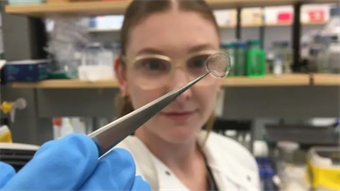
To prevent hypoxia, the team developed a soft, flexible gel, which combines water with a choline-based liquid that is antibacterial, non-toxic and biocompatible. When the gel is connected to a small battery, it functions as an electrolyzer that splits water molecules to create a slow, steady supply of oxygen.
The gel conforms to the shape of each wound, filling in the crevices where oxygen levels are reportedly lowest and infection risk is highest. Before setting, the gel precisely molds to the contours of the damaged tissue.
Because vascularization — which is the formation and creation of blood vessels and capillaries — can take weeks, short-lived oxygen delivery tends to be insufficient. However, the new delivery system can maintain oxygenation for up to a month, thus helping to convert a non-healing wound into a wound that heals more like a typical injury.
During trials of the gel conducted on diabetic and older mice, untreated injuries failed to heal wounds and were oftentimes fatal. Yet, when the oxygen-generating patch was applied and replaced weekly, the wounds closed in roughly 23 days, and the mice survived.
An article detailing the gel, "A smart self-oxygenating system for localized and sustained oxygen delivery in bioengineered tissue constructs," appears in the journal Nature Communications Material.