New mouth patch promises to detect inflammation before symptoms appear
Marie Donlon | March 05, 2026A team of researchers at Texas A&M University has created a wearable, tissue-adhesive biosensor capable of detecting inflammation biomarkers — some of the initial signs of gum disease — in the mouth with molecular precision.
Currently, detecting gum disease requires a dentist performing a visual exam, typically detecting problems only once tissue damage has begun. As such, the Texas A&M team has developed the wearable, tissue-adhesive biosensor.
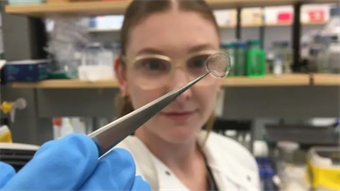
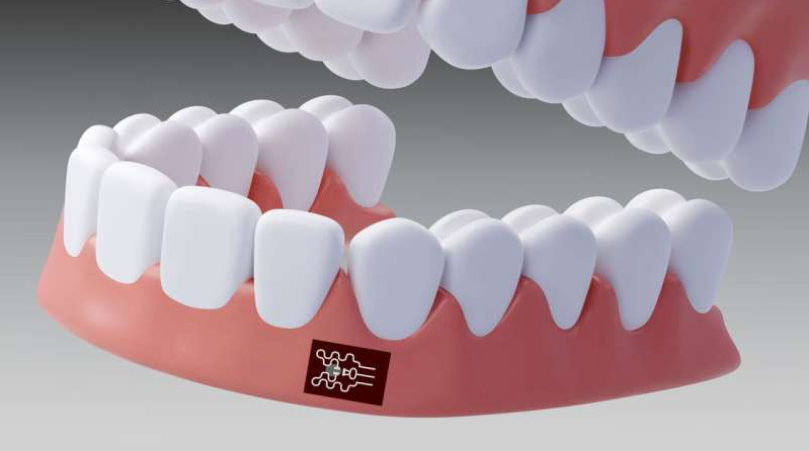 Source: Rachel Barton/Texas A&M Engineering
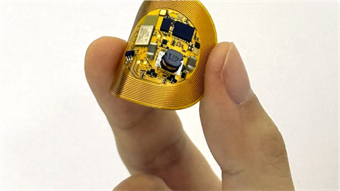
To detect biomarkers of inflammation in the mouth, the team created a multi-layer sensor capable of functioning in the wet oral environment and remaining attached while the wearer is talking and eating. The specialized sensing layer of this patch targets the tumor necrosis factor-alpha (TNF-⍺) protein, which is a key biomarker for inflammation.
The team explained that the graphene-MXene sensing layer is capable of binding specific probes that attach exclusively to the target protein. The layer features an inherent conductivity and when molecules like the targeted protein bind, the alteration in charge can be measured, thus enabling highly sensitive detection at the femtogram-per-milliliter (fg/mL) level.
"For context, a patient with a viral infection might show symptoms at 10 million or 1 billion virus copies per milliliter," the team added. "Our sensor could detect 100 to 150 per milliliter."
The sensor achieved detection at just 18.2 fg/mL in the lab, explaining that achieving such sensitivity is challenging, particularly if unwanted biomarkers are also detected. However, the outer layers of the patch reportedly helped to improve the patch's selectivity.
Meanwhile, the tissue-adhesive hydrogel also includes a selective-permeable hydrogel layer that filters out unwanted molecules.
To accomplish that, the team engineered a tiny opening that only allows the smaller biomarkers through. That combined with the highly selective probe attached to the sensing layer reportedly allows for accurate selectivity.
"Sensing measurements can be significantly influenced by the dynamic movement of tissues," the team added. "A more robust tissue bond allows for a more reliable sensing performance independent of the strain."
Further, a selectively permeable layer behaves like a molecular mesh, allowing specific biomolecules to pass through based on size and chemical interactions, thereby enhancing detection accuracy. The team tested similarly sized biomolecules and found that interactions with the polymer network improved selectivity. The system was evaluated in guinea pigs, which were selected based on their similarities to humans in terms of oral inflammation.
An article detailing the research, “Tissue-adhesive hydrogel–MXene biosensor for in situ intraoral TNF-α detection,” appears in the journal Science Advances.