Essential fastening solutions for modern server infrastructure
February 13, 2026As organizations pour billions into AI workloads, cloud computing and high-performance data centers, the spotlight naturally falls on cutting-edge server blades, networking gear and storage arrays. Yet there’s a critical element that rarely gets attention but can make or break system reliability — the fasteners that physically secure these expensive components.
For distributors serving the data center and electronics manufacturing markets, understanding these specialized fastening requirements isn’t just technical knowledge. It’s a competitive advantage that positions distributors as a strategic partner rather than a commodity supplier.
The hidden cost of fastener failure
In data center environments, fastener failure carries consequences that extend far beyond a loose screw.
Poor-quality fasteners can trigger a cascade of problems — like loose connections leading to signal loss, equipment damage from sustained vibration and thermal cycling, and in worst cases, metal debris from degrading finishes falling onto PCBs and causing catastrophic shorts.
The financial stakes are substantial. Individual server line cards can exceed tens of thousands of dollars per unit. And when damage is due to fastener failure, the costs multiply — emergency service calls, engineering time for root cause analysis and potential redesigns, and the most expensive consequence, unexpected downtime in a mission-critical facility.
The rise of open-source hardware designs and global supply chains has expanded sourcing options, but has also introduced quality variability. Low-cost fastener alternatives may seem adequate on paper, but many fail under the demanding data center conditions of sustained thermal stress, constant vibration and thousands of assembly cycles.
For distributors, this creates opportunity. Customers who’ve experienced fastener-related failures actively seek suppliers who can provide not just parts, but expertise. The ability to specify the right fastening solution upfront saves customers from expensive downstream problems and builds long-term relationships based on technical trust.
Why material integrity is non-negotiable
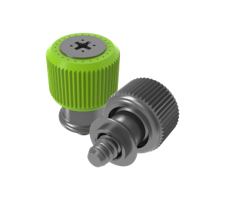 Figure 1: Captive panel fasteners. Source: PennEngineering
Captive panel fasteners form the backbone of server enclosure and chassis assembly, securing panels, circuit boards and modules throughout the system. Their material composition and surface finish quality directly impact both system durability and safety.
Surface finish quality deserves particular attention. Inferior finishes degrade under thermal cycling, which can lead to galling during installation, corrosion over time and stripped threads that affect serviceability. More critically, poor-quality finishes can flake during operation, with metal particles falling onto nearby circuit boards and creating shorts or permanent component damage.
Thread integrity under repeated assembly and disassembly is crucial. Servers require frequent access for upgrades and maintenance. This means fasteners must maintain consistent torque values and resist thread wear through hundreds of cycles without compromising their holding power.
When discussing captive panel fasteners with customers, distributors should focus on these quality indicators rather than competing solely on price. The total cost of ownership calculation heavily favors premium fasteners when factoring in reduced failure rates, longer service cycles and eliminated emergency replacements.
Reducing PCB stress with SMT installation
Traditional press-fit fasteners come with inherent risks. The mechanical force required creates stress on the PCB substrate, which can cause microscopic cracks that propagate over time. Even when boards survive installation intact, press-fit processes add secondary operations, which increases both labor costs and handling risk.
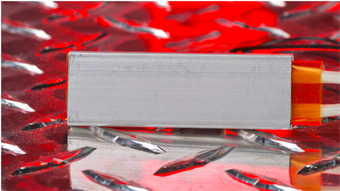
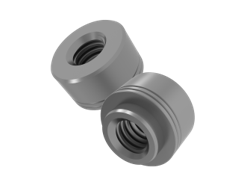 Figure 2: Surface mount technology (SMT) fasteners. Source: PennEngineering
Surface mount technology (SMT) fasteners offer a significant advancement. These specialized fasteners install during the standard reflow soldering process, right alongside other surface-mount components. During reflow, the fastener forms a strong metallurgical bond directly to the board’s copper pads, creating both mechanical attachment and excellent electrical conductivity.
The advantages are many. They eliminate secondary pressing operations, which reduces labor costs and streamlines production. The absence of mechanical pressing stress significantly reduces board damage risk. For design engineers, SMT fasteners allow higher component density since there’s no need to accommodate press-fit tooling access.
Products like the ReelFast SMTSO arrive on tape-and-reel packaging compatible with standard pick-and-place equipment, making them ideal for automated, high-volume assembly. They provide strong threaded attachment points for heatsinks, shields and mounting hardware without affecting board integrity.
For distributors, SMT fasteners represent an opportunity to engage customers earlier in the design process. These components require specification during PCB layout, so there’s a natural touchpoint for technical consultation, which can lead to recurring business across multiple designs.
Space-saving solutions for compact enclosures
Modern server architecture trends toward ever-greater component density. As processing power increases and form factors shrink, every millimeter of internal space is valuable. Traditional fastening methods that create protrusions will increasingly conflict with these space constraints.
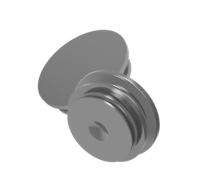 Figure 3: SpotFast fasteners. Source: PennEngineering
SpotFast fasteners create flush connections between metal sheets with no protrusion on either surface. These fasteners permanently join two metal panels, even of different thicknesses or dissimilar materials like steel to aluminum, and maintain a completely smooth profile on both sides.
The flush-mount capability of SpotFast fasteners has several advantages. It eliminates airflow disruption in thermal management, where protruding fastener heads can create turbulence. Their smooth finish simplifies cosmetic treatments, as panels can be painted or powder-coated after installation. And their space-saving ability allows for more compact overall designs — critical in rack-mounted equipment where vertical height directly translates to data center capacity.
Many engineers specify SpotFast when designing compact, modular server architectures where internal volume is at a premium. The technology proves particularly valuable in chassis frames and anywhere a permanent joint is needed without sacrificing space to traditional hardware.
Smooth access for high-frequency maintenance
Data center operations require frequent physical access to equipment. Hot-swappable components — storage arrays, power supplies and network interface cards — slide in and out of chassis on specialized rails. These high-frequency access points create unique fastening requirements.
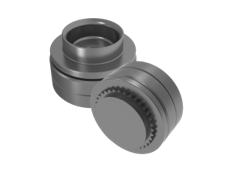 Figure 4: Roller bearing fasteners. Source: PennEngineering
Roller bearing fasteners integrate miniature roller bearing elements directly into the fastener assembly and create smooth, low-friction linear motion. The engineered bearing surfaces provide consistent performance through thousands of cycles — critical in applications where components may be accessed daily.
In dense rack environments where technicians work in awkward positions, roller bearing slides that move effortlessly will reduce physical strain and speed up maintenance. The reduced friction also minimizes wear and tear on both the fastener and mating surfaces, so overall hardware life is extended.
For distributors, roller bearing fasteners represent an interesting market dynamic. While per-unit cost is higher than basic panel fasteners, the consumable nature of rack hardware creates ongoing demand. As servers get upgraded or replaced, the supporting fastening hardware follows — generating steady, repeat business.
What distributors should look for in fastener partners
As technical demands grow, the relationship between distributors and manufacturing partners is critical. Competing requires more than maintaining inventory. It demands access to trusted engineering expertise and manufacturing capabilities.
Engineering support capabilities should top the list. Look for partners offering design for manufacturability analysis and design failure mode and effects analysis. Manufacturers with in-house applications engineers who can troubleshoot installation challenges deliver immediate value that strengthens customers as solutions providers.
Quality control infrastructure is also important. Manufacturing partners should maintain in-house testing capabilities for plating integrity, corrosion resistance and mechanical properties. The ability to provide test reports and certifications protects both providers and customers from quality issues.
Compliance with environmental and safety regulations is a non-negotiable. Verify that fastener sources maintain RoHS compliance, meet environmental directives and hold appropriate industry certifications. This is becoming increasingly mandatory for OEMs selling into regulated markets.
Supply chain readiness also deserves consideration — with global manufacturing footprints offering supply security and flexibility. Consistent part availability, reasonable lead times and quick response to unexpected demand spikes is what differentiates a capable partner from the rest.
Positioning fasteners as essential infrastructure
The data center industry focuses intensely on protecting data from virtual threats, yet physical reliability remains foundational. Server infrastructure is a massive investment, and the fasteners holding it together deserve attention that’s proportional to their criticality.
For distributors, this is an opportunity to reframe the conversation. Rather than positioning fasteners as commodities chosen primarily on price, successful distributors position them as essential infrastructure components that directly impact system reliability and total cost of ownership.
The cost-benefit equation strongly favors quality when properly analyzed. The upfront investment in premium fasteners, perhaps a few hundred dollars difference on a $50,000 server, pales in comparison to the potential cost of failures. One unplanned maintenance event can cost thousands in technician time and lost productivity. Component failure from fastener debris can destroy tens of thousands of dollars in hardware. And system downtime in a data center can costs hundreds or thousands of dollars, per hour.
Customers who understand the math become loyal partners, not just transactional buyers. Building these relationships requires moving beyond order-taking to genuine technical consultation. When a customer calls about fasteners for a new server design, ask questions about operating environment, temperature ranges, service intervals and assembly methods. Use their feedback to recommend fasteners that will deliver reliable performance throughout the product lifecycle.
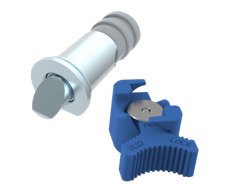 Figure 5: Specialized fastening solutions. Source: PennEngineering
The server and data center market continues its explosive growth, driven by demand for computing power and storage capacity. And this growth creates greater demand for specialized fastening solutions. Distributors who develop expertise in these applications, partner with manufacturers offering true engineering capabilities and position themselves as technical advisors will capture an admirable share of this market.
In an industry built on reliability, the fasteners securing critical components aren’t to be overlooked. They're essential investments in system uptime and long-term performance.