New spray stops life-threatening battlefield bleeding in under a second
Marie Donlon | February 20, 2026A spray that is capable of instantly halting severe bleeding has been developed by a team of scientists from the Korea Advanced Institute of Science and Technology (KAIST).
Designed for applications where emergency medical treatment must be administered to patients at risk of bleeding out — such as on the battlefield — the new spray reportedly reacts with blood and turns it into a soft, rubbery gel in under a second, physically sealing the wound and accelerating the natural clotting process.
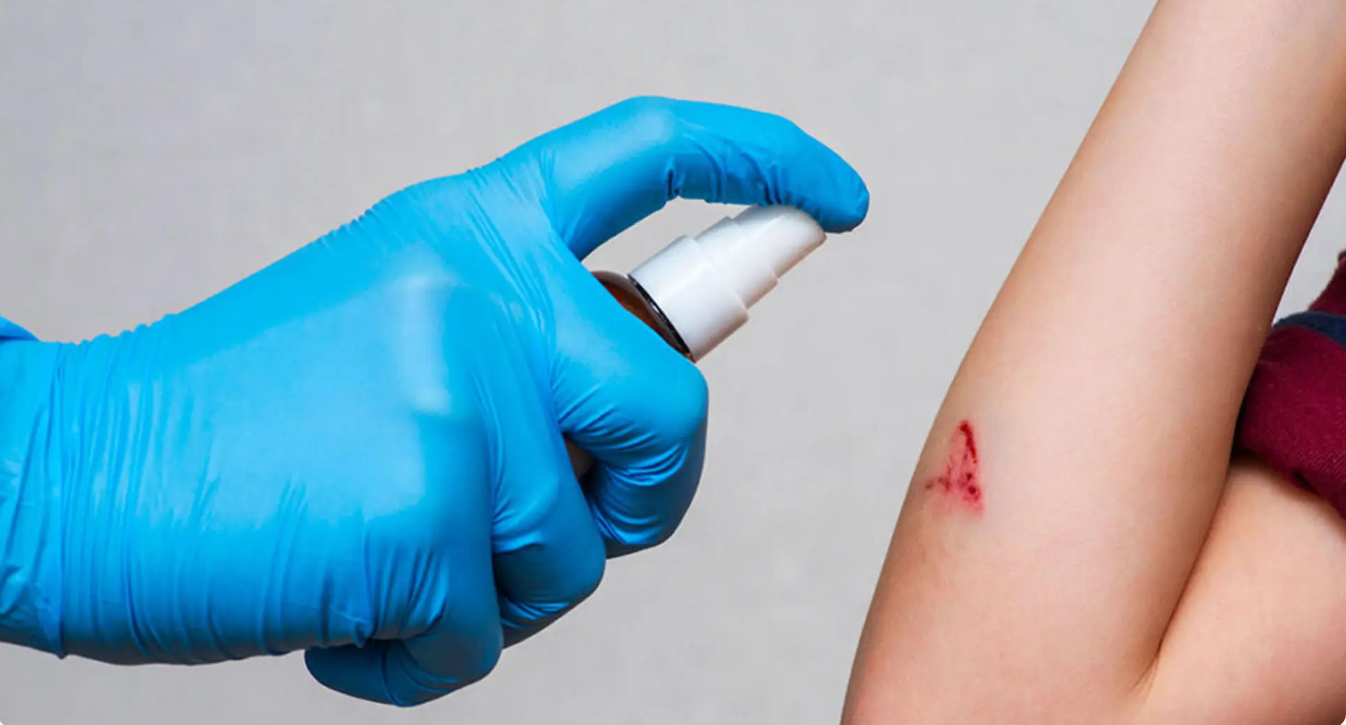 Source: Wound Care Education Institute
Unlike traditional field medicine that uses bandages, the new spray is fast acting and does not require pressure on the wound.
According to its developers, the spray is ideally suited for treating wounds from gunshots, shrapnel injuries, deep cuts and for scenarios where tourniquets or gauze would not work well.
The spray is comprised of a powder with three main natural ingredients combined into what the team calls AGCL. The first of these ingredients is the seaweed-derived alginate, which creates a gel when it encounters liquids such as blood.
The second ingredient is bacteria-derived gellan gum, which strengthens the gel and helps it keep its shape under pressure — up to around 40 kilopascals (kPa), which is equal to a strong hand press.
The third ingredient is chitosan, which is derived from the shells of crustaceans and insects. Because chitosan is positively charged, it attracts things like red blood cells and platelets. This ingredient also expedites the clotting process.
All together, these three ingredients seal a wound almost instantly while expediting the body’s natural healing processes. Further, the powder is able to absorb roughly seven times its weight in blood.
Although the spray is still in the research and development stage, it could eventually be used for the military and emergency medical industries.
The spray is detailed in the article, “An Ionic Gelation Powder for Ultrafast Hemostasis and Accelerated Wound Healing,” which appears in the journal Advanced Functional Materials.