Computing a New Path to Improve Catalysts
Engineering360 News Desk | April 08, 2016Using computational chemistry, researchers at New Mexico State University have developed what they say is a more efficient and less-expensive process for selectively oxidizing organic chemical intermediates. Such intermediates are used in the chemical industry to make everything from plastics to fine chemicals and pharmaceuticals.
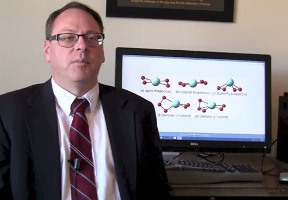 NMSU’s Thomas Manz developed a selective oxidation catalyst using computational chemistry. Image source: Tiffany Acosta/NMSUDr. Thomas Manz, Chemical and Materials Engineering assistant professor at NMSU, and his colleagues used quantum chemistry calculations to identify catalysts and reactive intermediates and followed the reaction processes in a computer using super-computing clusters through the Extreme Science and Engineering Discovery Environment, or XSEDE, a National Science Foundation-funded program. It took more than one million computer hours and nearly four years to develop the new selective oxidation catalysts.
How It Works
The new catalysts contain a transition metal, such as zirconium, bound to several organic ligands and act as a bank for oxygen atoms and electrons, Manz says.
“Oxidants, such as oxygen molecules, deposit oxygen atoms into the bank. Substrate molecules, such as organic compounds containing double bonds, can extract oxygen atoms from this bank to produce oxidized products.”
The process relies on an eta-3 ozone intermediate in which two oxygen atoms from molecular oxygen can be easily separated from each other and passed on to two different substrate molecules. This makes the reaction more efficient by eliminating the need for a reaction co-product, he says.
This should enable new selective oxidation processes to be commercially developed that reduce waste generation and energy consumption. A one- or two-step process can be used to achieve the desired results, as explained in this video.
New Mexico State University has filed a patent for the catalyst and the long-term goal is to work with industrial companies to commercialize the technology.