Virtual Reality, 3D Printing May Improve Hospital Design
Engineering360 News Desk | April 07, 2016Virtual reality technology and 3D printing are being applied to design hospitals that may better meet the needs of patients. Consultants worked with researchers from Doctors Without Borders/Médecins Sans Frontières (MSF) to digitize existing plans for a hospital built by MSF in the Philippines following Typhoon Haiyan in 2013. The facility was then 3D-printed to create a virtual reality experience in a game engine that generates a virtual world. In this world, the user can navigate through the center using a virtual reality headset and a game pad (see video).
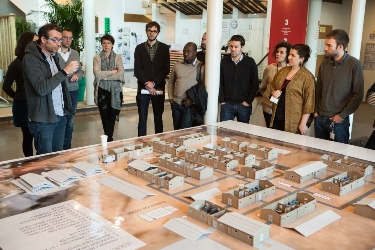 Jean Pletinckx, MSF director of logistics, reviews 3D-printed model of hospital in the Philippines. Image source: Credit: Alex Yallop/MSF“Such technologies will undoubtedly make discussions more efficient, more vivid and more graphic,” says Jean Pletinckx, MSF director of logistics. “They will allow people to really see themselves inside our future hospital and this will improve hospital design as well as training and briefings. It will also allow our partners, like local ministries of health, to better understand what we can provide and better feedback on our suggestions.”
Typically, MSF’s medical and logistical teams work together to draft 2D drawings before building a hospital. This new approach will arm doctors on the ground with new tools and make sure they have facilities that are best-designed for the environments in which they are located. This technology will also help MSF train doctors by showing them exactly what a hospital can do before they begin working there.
While the hospital in the Philippines was a “proof of concept” developed in an existing facility, in the near future 3-D models will be able to be sent digitally anywhere in the world and viewed on any web browser so field staff can view and evaluate the design before the first bricks are laid. This will ensure that the facility is designed in a way that will be most efficient and effective for doctors and patients.