Inspection process keeps water mains flowing
S. Himmelstein | December 26, 2025 Schematic of the AVA process. Source: RJN Group
The growing need to inspect aging water distribution infrastructure typically relies on a complex, time-consuming process. Traditional inspection methods require water mains to be taken out of service so that analytical equipment can be inserted and activated. However, a non-disruptive assessment method is now available and has been successfully deployed in Baltimore, Maryland.
A 36-inch cast iron transmission main built in the city in 1932 was experiencing frequent joint leaks, necessitating recurring repairs. To gauge the likely source of these leaks and to determine whether an entire water line replacement was necessary, city engineers turned to a new non-disruptive assessment technology.
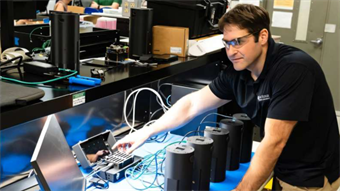
Field services firm RJN Group and underground water infrastructure specialist KenWave deployed advanced vibroacoustic analysis (AVA), a non-invasive technology that measures a pipe’s dynamic response to controlled vibrations. Powered by a dynamic response imaging approach developed by underground water infrastructure specialist KenWave, AVA allows data to be collected while the pipeline remains fully operational. It does not require the line to be taken out of service or equipment to be inserted inside.
Readings were captured at 500-ft intervals along the main, using seven existing appurtenances and nine new potholes. This spacing generated a detailed view of wall thickness for each 6.6-ft pipe segment as a wave generator excited the structure during a series of controlled frequency tests. Vibration patterns recorded by sensors were correlated to the pipe’s wall stiffness, revealing changes in wall thickness and hoop stress.
The AVA testing revealed wall loss ranging from roughly 4% to 27%, with no segments showing distress levels signaling imminent failure. About 85% of the pipeline showed moderate loss between 10% to 30%, and none of the sections exceeded the 30% threshold that would warrant immediate action.
The cost- and labor-saving inspection method confirmed that the water main remains structurally sound. Recurring maintenance issues stem from leaky joints rather than impending pipe failure, pointing city engineers toward targeted solutions instead of full pipeline replacement.