Electrochemical coating targets marine fouling
Marie Donlon | January 20, 2026A team of researchers from Flinders University has developed an anti-foul coating to reduce marine fouling on structures and vessels.
According to its developers, the new anti-foul coating is not detrimental to the environment unlike most antifouling coatings currently in use that tend to be hazardous to the environment.
 Source: ACS ES&T Water (2025). DOI: 10.1021/acsestwater.5c00794
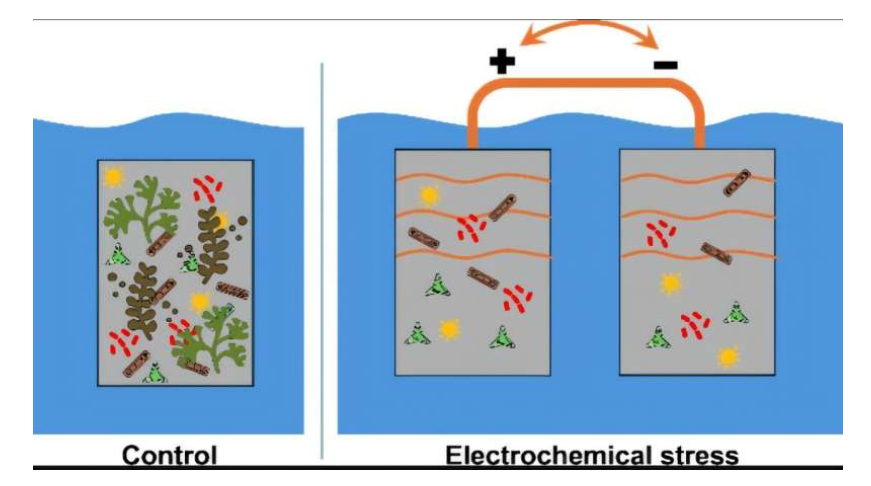
The new electrochemically-active coating reportedly removed macrofouling organisms and reduced microfouling attachment on marine surfaces, the team suggests.
During trials of the antifouling coating, the antifouling treatment was applied to objects that were submerged in the Port Adelaide River Harbor Basin at Osborne, South Australia for 55 days. The team employed a combination of scanning electron microscopy, flow cytometry and 16S amplicon sequencing to assess the antifouling capabilities of the coatings.
Items coated with the electrochemically active coating reportedly showed no evidence of macro-fouling. Likewise, there was a reduction in the number of attached micro-organisms on the electrochemically coated objects.
An article detailing the coating, “Prokaryote Fouling Communities on Novel Electrochemically Active Coatings after Submersion in Port Adelaide River Harbor Basin,” appears in the journal ACS ES&T Water.