
How nuclear waste can fuel hydrogen production
S. Himmelstein | November 27, 2025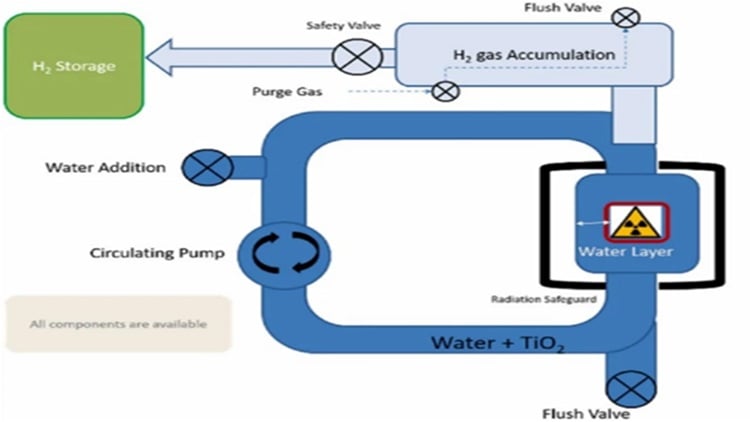 Representational system for hydrogen production from nuclear waste. Source: Nuclear Engineering and Design /10.1016/2025.114511.
While it may seem counterintuitive to value nuclear waste as a source of renewable fuel, researchers from the University of Sharjah in the United Arab Emirates envision this environmental liability as a promising resource for hydrogen production.
A technology review published in Nuclear Engineering and Design highlights the synergy between nuclear technology and hydrogen production represents a significant leap toward a comprehensive and resilient global energy system. The innovative utilization of nuclear waste for hydrogen production presents a dual solution to pressing global challenges: mitigating environmental concerns associated with radioactive waste and addressing the escalating global energy demand.
The approach entails combining conventional electrolysis with exposure to radiation from the nuclear waste. Radiation-enhanced electrolysis can increase hydrogen yield by up to tenfold compared to traditional electrolysis. Uranium-based catalysis, which uses uranium compounds extracted from the waste to accelerate chemical reactions, particularly splitting water into hydrogen, is deemed a cost-effective technology as it reduces the need for rare and expensive metals.
These uranium catalysts can also be deployed to enhance the steam-methane reforming reaction widely used in industrial hydrogen production processes. Additionally, heat generated by the waste can be harnessed to drive the required chemical and electrochemical reactions, making the processes more efficient without the need to invest in a secondary heating system.
According to the researchers, "These methods show promise in increasing the amount of hydrogen produced, decreasing the need for costly and rare elements, and lessening the long-term environmental effects of nuclear waste."




I'm guessing the volume of H2 produced won't be worth it. Also it wounds like the waste has to be processed; why not just continue the process and make new fuel for a reactor? I'll await a peer review.