Flax-based smart sensor fabric lets asphalt roads report damage without drilling
Marie Donlon | October 15, 2025A team of scientists from the Fraunhofer Institute for Wood Research at the Wilhelm-Klauditz-Institut in Germany has created a smart fabric embedded with sensors capable of monitoring the invisible health of asphalt roads in real time.
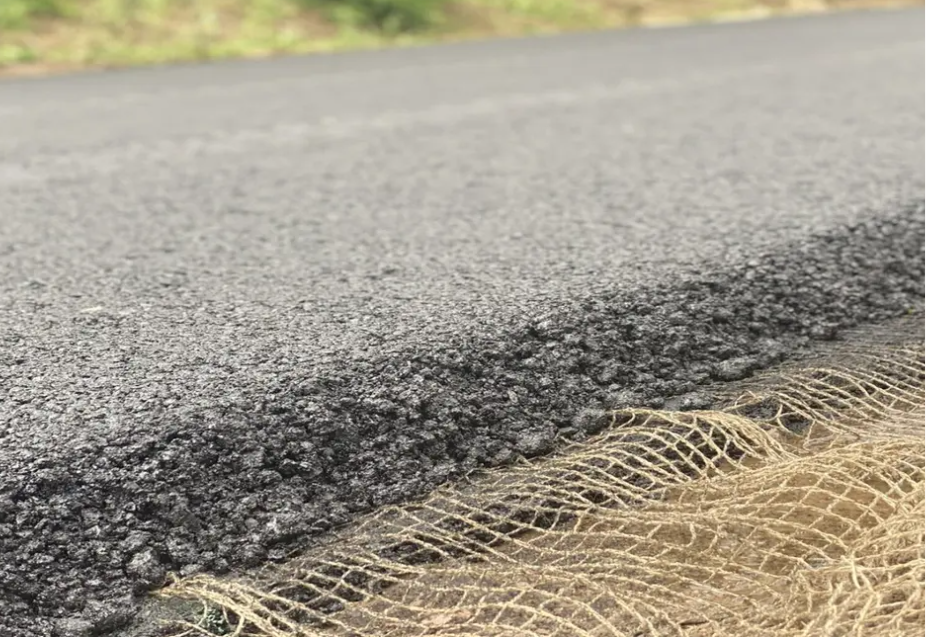
Teaming up with experts in the SenAD2 project, the researchers created the bio-based fabric, which is reinforced with conductive sensor wires that are directly embedded into the asphalt. Once embedded, the sensor-powered fabric measures strain and stress within the base layer. Meanwhile, artificial intelligence (AI) algorithms analyze the data to offer real-time insights into asphalt health.
 Source: Fraunhofer WKI
Any changes alter the fabric’s electrical resistance, thereby offering a constant flow of data about the asphalt’s condition. This interaction between the sensors and AI helps to assess the condition of road structures in real time.
The team developed the fabric as a solution to modern day road maintenance, which is typically reliant on visible surface wear or destructive core drilling to determine the presence of deeper damage. Although cracks and surface defects caused by traffic and environmental stress are often visible and thus easy to detect, micro-crack and damage detection in the lower layers relies on drilling and extracting core samples.
Such detection processes tend to lead to expensive and inefficient repairs that disrupt traffic flow while also reducing the lifespan of the roadway.
As such, the team devised their smart measurement and analysis system for nondestructively monitoring the condition of the asphalt base layer over a large area of roadway.
“Our goal is to be able to plan over a longer period of time, to continuously monitor changes in the condition of the road and, on that basis, to establish forecasts and incorporate them into maintenance management activities,” the researchers explained.
The sensor-infused lightweight fabric was developed using flax fibers, which are a natural, renewable and inexpensive material. The flaxseed fabric is interwoven with ultra-thin conductive wires less than a millimeter in diameter and then integrated directly into the natural fiber fabric during the weaving process, which makes it highly resistant to slippage or displacement. Additionally, the team used thick, heavy yarns and wide spacing to further stabilize the material.
The team added that the fabric was developed to withstand the weight of trucks and road pavers during construction work.
As explained in a press release., as soon as the fabric is embedded, the sensors feed data to an accompanying roadside measurement unit, which then stores and subsequently transmits the data for analysis.
AI-powered software then interprets the data to identify damage patterns and forecast how the road will degrade over time.