
Cardboard waste gets new life as robust construction material
Marie Donlon | October 20, 2025A new building material that is composed of cardboard, water and soil to create a sustainable alternative to concrete has been developed by a team of researchers from the Royal Melbourne Institute of Technology (RMIT) in Australia.
According to its developers, the sustainable construction material, dubbed cardboard-confined rammed earth, has roughly one-quarter of concrete’s carbon footprint and is expected to help reduce landfill waste.
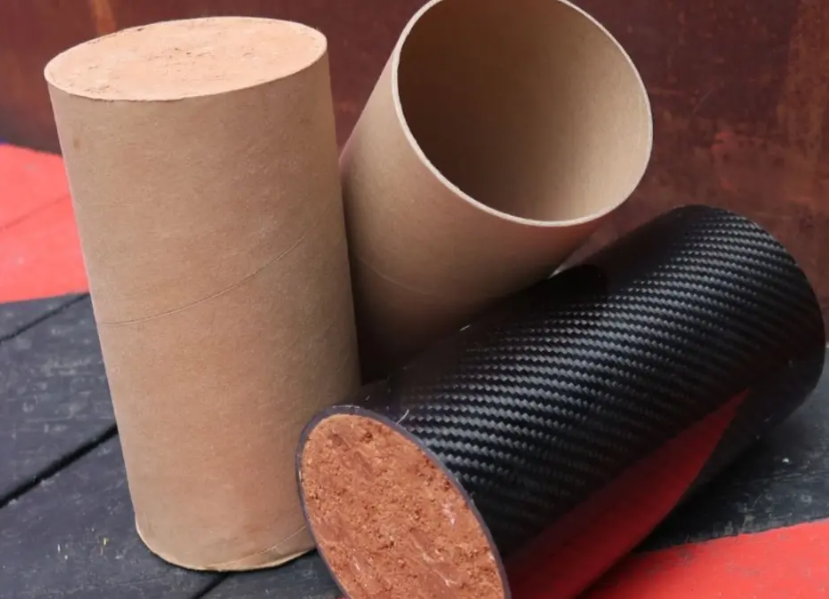 Source: RMIT
The team suggests that this new material could be used to build strong walls for supporting low-rise buildings.
“This innovation could revolutionize building design and construction, using locally sourced materials that are easier to recycle,” the researchers added. “It also reflects the global revival of earth-based construction fueled by net zero goals and interest in local sustainable materials.”
With this new approach, the team combined the strength of rammed earth with the adaptability of cardboard to create a new building material.
Unlike the tradition rammed earth building method that involves compacting damp soil, sand and clay layers into a solid wall, the team’s new rammed earth approach does not use cement for strength.
Instead, the strength of the new material relies on the thickness of cardboard tubes wherein a mixture of soil and water is compacted inside a cardboard formwork. The team noted that the new material can be created directly at a construction site, thereby reducing the costs associated with transporting building material such as brick, steel and concrete.
Additionally, the researchers have also devised a specific formula to calculate the material’s strength based on the cardboard’s thickness to achieve a strength similar to “high-performance concrete.”
The new material has about one-quarter of concrete’s carbon footprint and costs roughly less than one-third as much, the team concluded.
The team’s work appears in the article, "Cardboard-confined rammed earth towards sustainable construction," which appears in the journal Structures.
In other words, a mud hut . . .