Team upcycles leftover cardboard to create foam packaging
Marie Donlon | January 15, 2024The team sought to develop a sturdy but lightweight mailing material alternative to the commonly used molded cushioning materials that are often derived from Styrofoam.
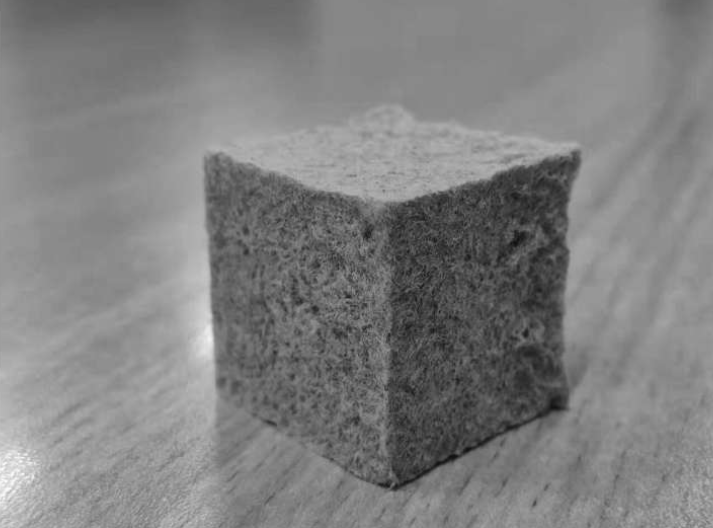 Source: Jinsheng Gou
To create their cardboard waste-derived foam, the team used a blender to break down cardboard scraps, turning it into a pulp, which was then mixed with either gelatin or polyvinyl acetate (PVA) glue. Once combined, the mixture was poured into molds which were subsequently refrigerated, then freeze-dried to create the cushioning foams.
The team reported that the paper-based foams proved suitable thermal insulators and strong energy absorbers with suggestions that they even outperformed some plastic foams.
Additionally, a heavy-duty version of wastepaper foam was also developed by combining pulp, gelatin, PVA glue and a silica-based fluid that hardens when force is applied. During testing, this iteration of wastepaper foam successfully endured hits from a hammer without being destroyed. The team suggests that this iteration of foam might be appropriate for use in force-intensive deliveries, such as parachute-free airdrops.