AI turns security cameras into instant fire detectors
Marie Donlon | September 15, 2025Researchers from the NYU Fire Research Group at NYU Tandon School of Engineering have created an artificial intelligence (AI) system that promises to improve fire safety by detecting fires and smoke in real-time using standard security cameras that are already installed in most buildings.
According to its developers, the system can analyze video footage and identify fires within 0.016 seconds per frame, possibly offering critical extra minutes for both evacuation and emergency response. The team explained that because the AI system can identify fires in the earliest stages from video, it promises to outperform conventional smoke detectors that demand significant smoke buildup as well as proximity to activate.
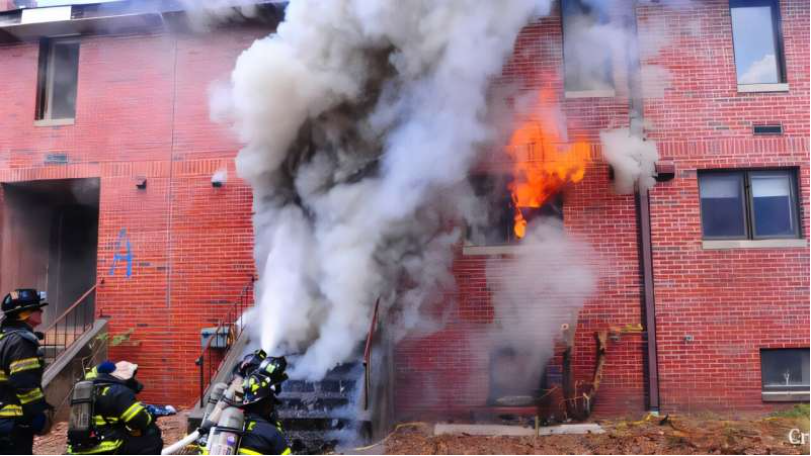 Source: New York Fire Department
"The key advantage is speed and coverage," explained the researchers about the system. "A single camera can monitor a much larger area than traditional detectors, and we can spot fires in the initial stages before they generate enough smoke to trigger conventional systems."
Developing what the team suggests is an ensemble approach, the system features multiple AI algorithms instead of relying on a single AI model that might potentially confuse a red car or sunset for fire. Rather, the system calls for the agreement between multiple algorithms ahead of confirming a fire, thereby dramatically reducing false alarms.
The researchers trained their models by constructing a custom image dataset that represented all five classes of fires as recognized by the National Fire Protection Association — from combustible materials to electrical fires and cooking-related incidents. The team noted that the best-performing model combination reached 80.6% detection accuracy.
The system features temporal analysis to distinguish actual fires from static fire-like objects that could potentially trigger false alarms. By monitoring how the size and shape of detected fire regions fluctuate over consecutive video frames, the algorithm could differentiate between a real fire and a static depiction of flames hanging on a wall.
"Real fires are dynamic, growing and changing shape," explained the researchers. "Our system tracks these changes over time, achieving 92.6% accuracy in eliminating false detections."
The system functions within a cloud-based internet of things (IoT) architecture where several standard security cameras stream raw video to servers that perform AI analysis. When fire is detected, the system automatically generates video clips and sends real-time alerts via email and text message. As such, the technology can be employed using existing CCTV infrastructure without needing expensive hardware upgrades.
Additionally, the technology could be incorporated into drones to locate wildfires in remote forested areas, offering early-stage wildfire detection, thereby buying critical hours in the race to contain and subsequently extinguish them.
The same detection system could also be incorporated into the tools that firefighters already carry including helmet cameras, thermal imagers, vehicle-mounted cameras and autonomous firefighting robots.
The team detailed their system in the article, “Artificial Intelligence-Integrated Autonomous IoT Alert System for Real-Time Remote Fire and Smoke Detection in Live Video Streams,” which appears in the IEEE Internet of Things Journal.